The collages came out as a result of the offline workshop in Warsaw led by Nasta from Human Constanta. The participants shared their stories and what worries them. They also collected and exchanged small signs of good neighbourliness in their lives. All of that resulted in the creative process of collages making.
As Nasta herself put it: “As migrants in Poland, we know what migrantophobia is: it’s in the news, in online comments, in reports of physical attacks. It can be frightening. But that is not the whole truth about our lives here.
Because there is something else too. The neighbour who says hello to us on the stairs, even though we don’t know her name. The neighbour who held the door or smiled at our child. The lady in the lift with her “Dzień dobry”. These are small signs, and they say: “I see you, you belong here.” There are more of them than it seems; we just don’t notice them against the background of anxiety.
On the eve of 9 November, the anniversary of Pogroms 1938, we remember that the fate of “strangers” depends on whether others see them as neighbours. And we choose to focus on what brings us together: good neighbourliness as an everyday practice that we can notice, strengthen and create.”
Pictures Description
(translated from Belarusian)
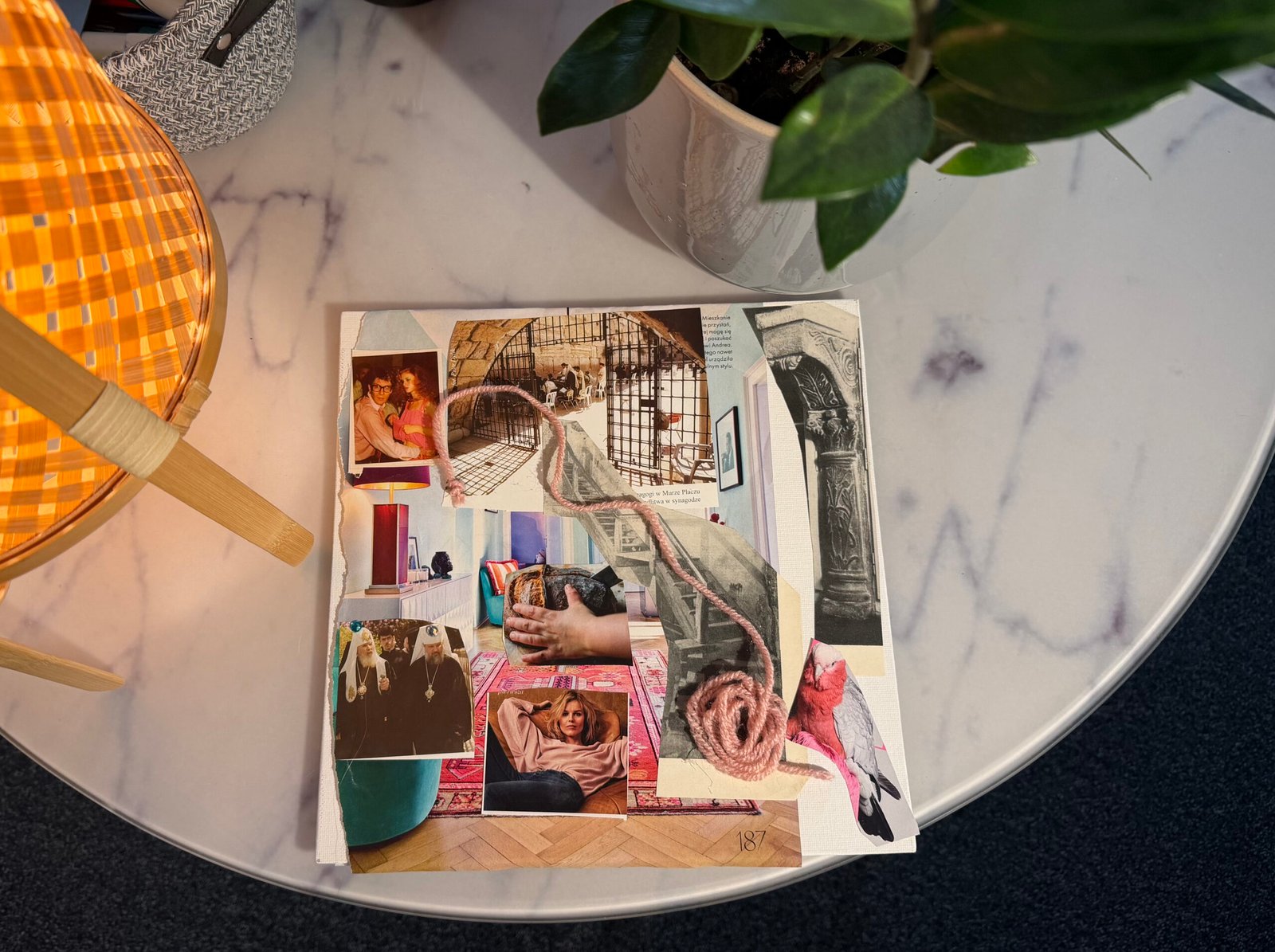
1 – Kiryl
I was mostly starting from the idea that good neighbourliness is a search, a process. It’s like climbing a staircase, and the climb can be hard. There can be helpers along the way: God, fairy tales, folklore. They help you reach the point where you open the doors of your home to different people, both metaphorically and literally, and truly share that moment of good neighbourliness with them. Events and people help with that.
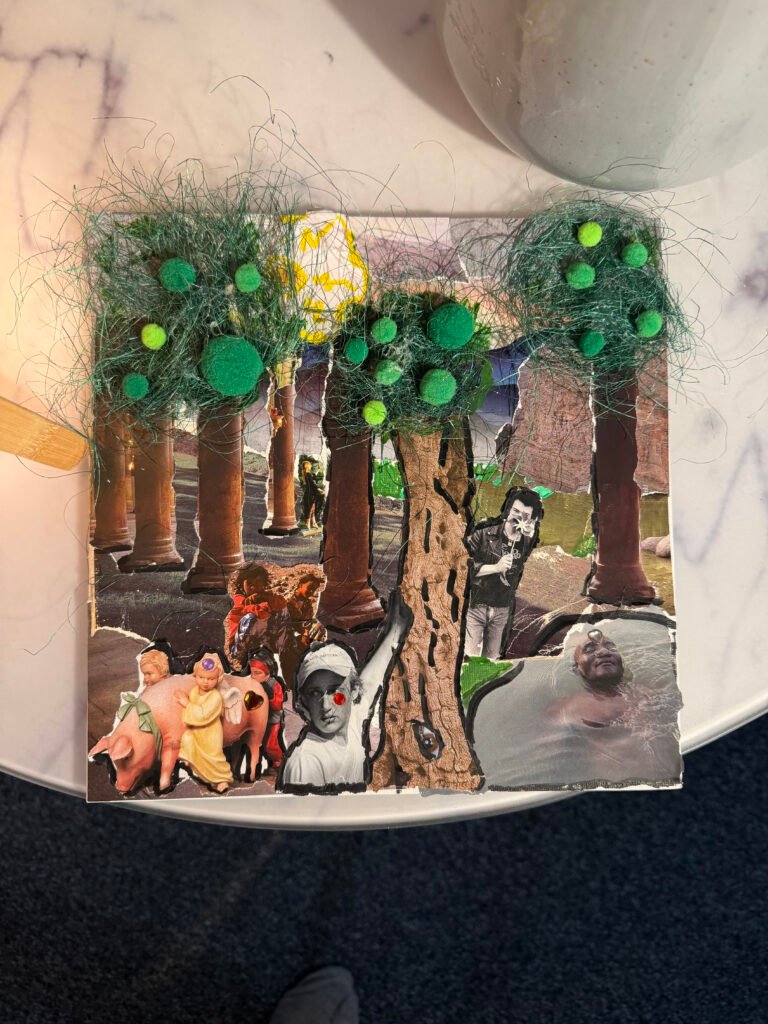
2 – Alhen
At first it was meant to be forum theatre, only on paper. But as the collage came together, it went in a completely different direction and turned into a fantasy about the world after the end of civilisation.
Columns turn into trees, nature is slowly taking back what’s its own, and what’s left of humans sprouts into new life. A little pig wanders among the ruins, and it still has a heart.
Not a single piece here was cut with scissors. Everything was torn by hand. These uneven, ragged edges largely give the work its character.
It’s a bright end of the world: the familiar world is gone, but so are the threats, and people are finally learning to live in harmony with nature and to value each other.
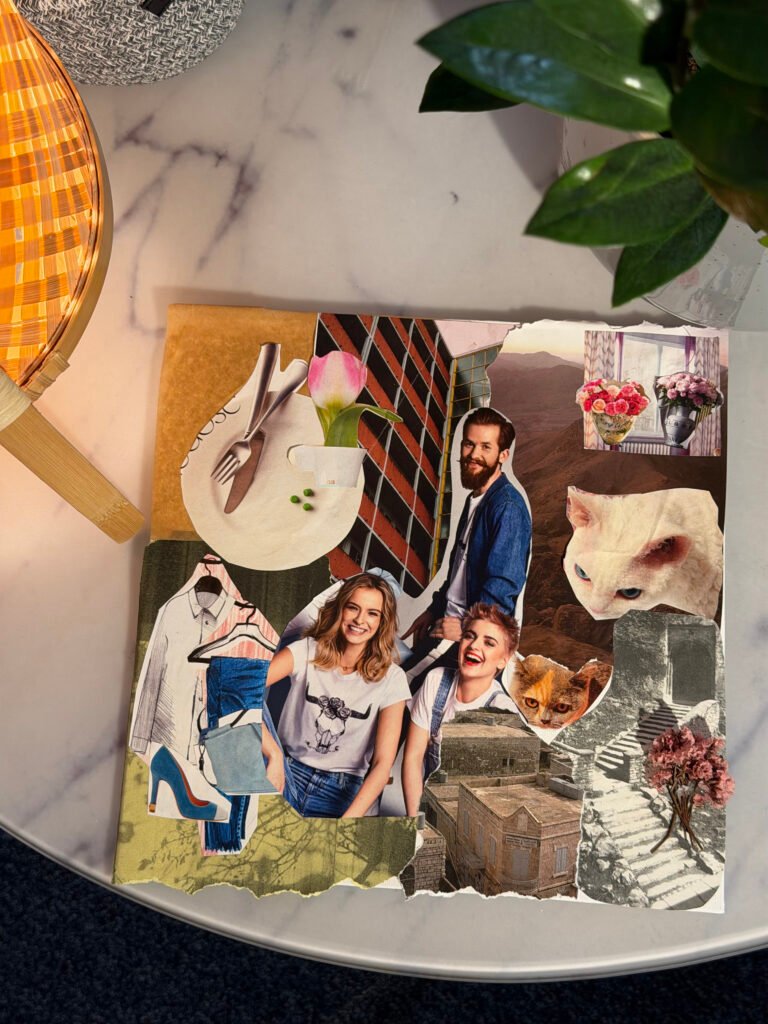
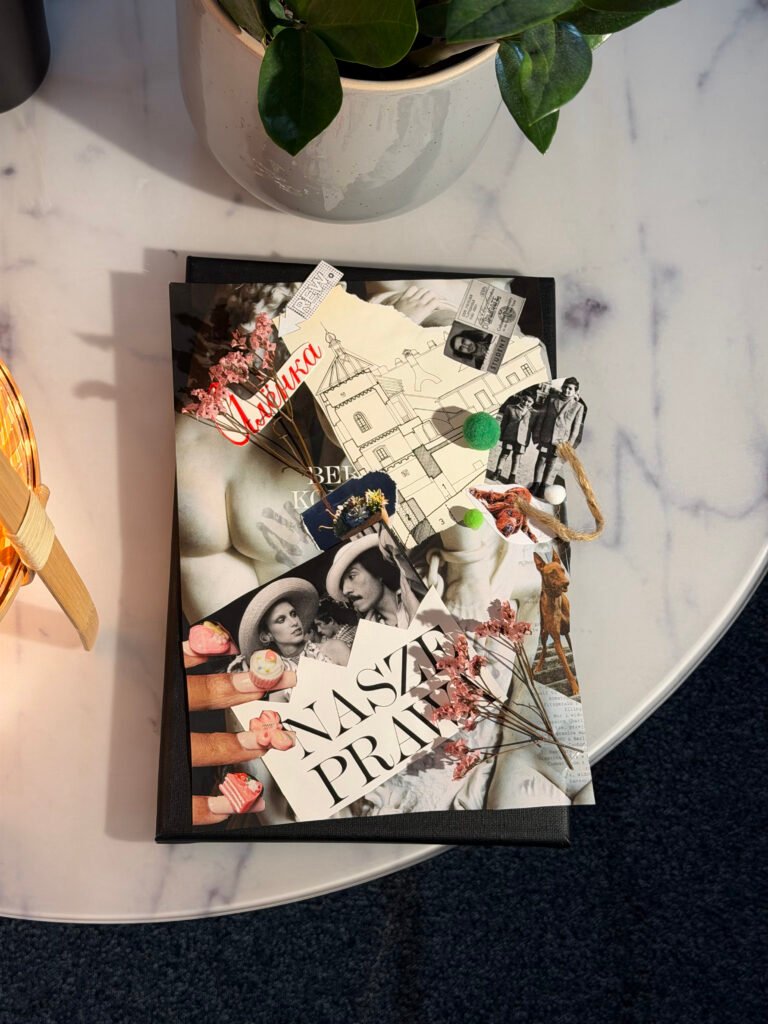
3 – Alena
When I look at my collage, I think more about my inner resources, about what brings me pleasure: food, cats, nice clothes, flowers, smiling people. The theme of good neighbourliness is really about sharing your pleasure and your joy with another person, and through your ability to share, encouraging them to share back. It’s about meeting in that place, simply enjoying it, getting at least a little from each other, and carrying it further into life. That’s what my collage is about.
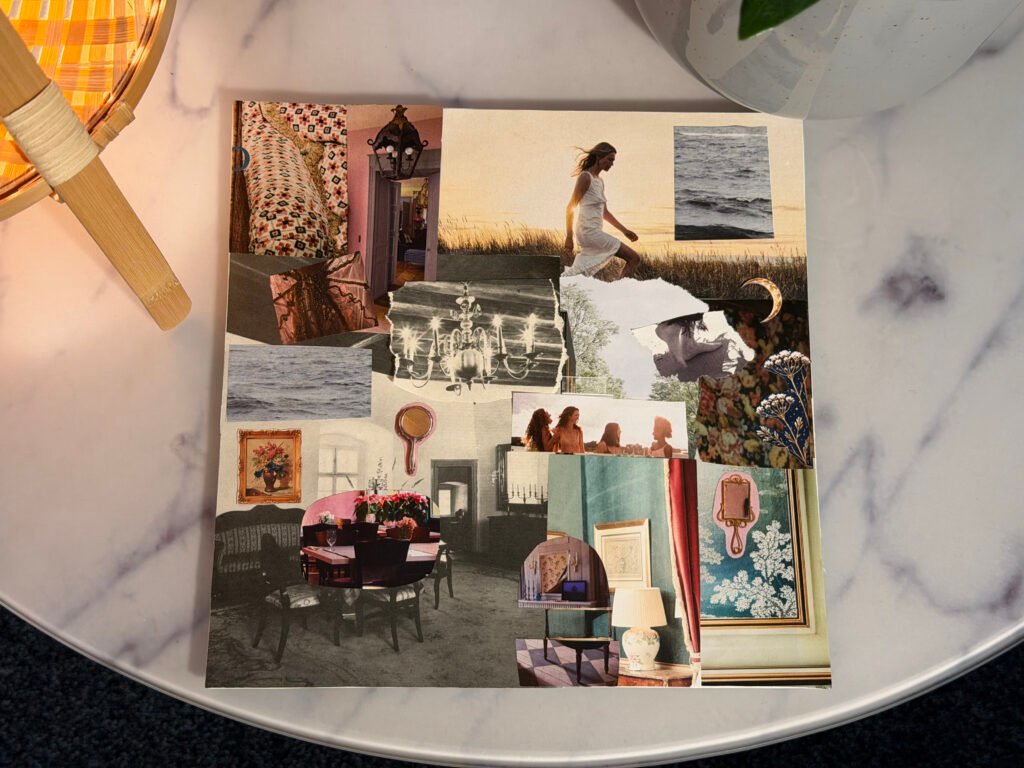
4 – Sveta
I was thinking about what we had discussed. We mentioned lots of practices and actions, but I didn’t want my collage to be just a list of them. I thought that besides the actions themselves, the inner resources of the person trying to build good neighbourly relations matter too. I wanted to convey the atmosphere more emotionally: creating a safe and cosy space around yourself.
In life I often meet people who turn any get-together into a little occasion. That’s the skill of creating an atmosphere. It might seem that some people are simply more gifted, but from what I see, it’s a skill and it takes work. You have to learn it, and then it gets better.
It’s the same with building relationships with neighbours. You look for what you can do, you try, you take steps, you learn, and then it gets better and easier. If you want to build relationships, you need a space you can invite people into, with a cosy, roomy atmosphere.
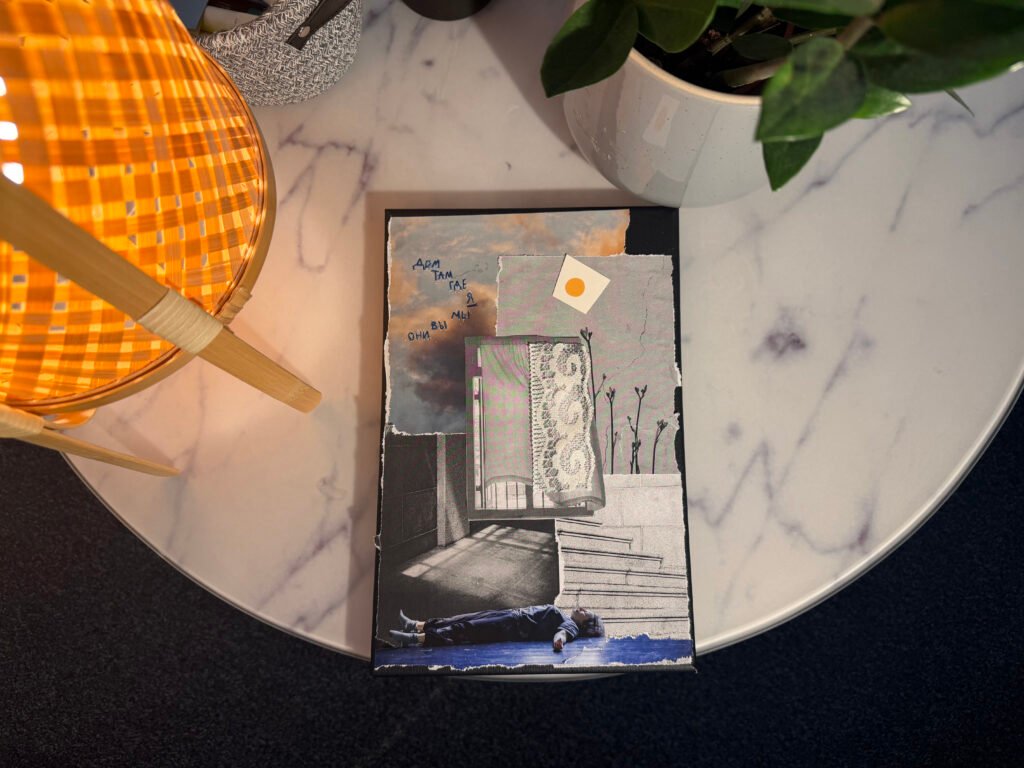
5 – Oleg
A house where neighbours live.
My collage says that neighbours come in all kinds. Our house might be home to a Muslim emigrant, a girl from Belarus, and tourists – Italians, French, Germans. We can live in peace and harmony in our house, our city, our country, our planet. After all, we’re neighbours.
And THIS IS OUR RIGHT to live!
6 – Sonia
So this is the piece I ended up with. I think it came out cold and isolated, but it feels like a sterile new space, like an exhale.
I never really thought about good neighbourliness before, and I never felt that the place I lived in was home. I felt at home more at friends’ places and with friends than in my own place. I think the first time it happened was in Warsaw, when I got my own flat, not even shared with friends. I managed to build some things of my own, some traditions, and started inviting people over.
I started to feel a need to connect with neighbours, and not only with them but with everyone a little further out too. I want to turn my home into a kind of micro-community, because it seems to start with a sense of yourself.
Common Threads Exhibition, 2026
From October 9 to 11, the exhibition “Common Threads” (Geteilte Fäden) was presented in Fürstenberg (Havel), Brandenburg, in October 2026. The exhibition is a collection of works by artists and collectives from Ukraine, Moldova, Belarus, and Germany. Some of these works were created during our educational trip to Moldova in April 2026 as part of the “Decolonizing Cultures of Remembrance” project.