Moldova and it’s peoples have been colonized, annexed, deported, Sovietized, and Europeanized. This is an attempt to tell about particular perspectives on being from/in/with Moldova through encounters with Moldovan people. Some of the people who are writing are not Moldovans, they visited temporarily with the aim to understand what it could mean to be Moldovan and how this identity is practised and remembered.
These dialogues are glimpses of identity we were able to catch, on side walks, in backyards, during a shared cigarette, while on a bus through the countryside, and so on. We reconstructed them from our memories. Memory is partial, fragmented, subjectively altered and reflects not only opinions of the people we met, but also the ways in which our memory formed them.
Thus, this delayed, reflective writing already incorporates processing or interpretation. This is what stuck with us, how we make sense of what we’ve learned, the pieces of people we don’t let go. Memory is not a flawed record, but data in and of itself—the way we remember a conversation tells about meaning, emotion, and lasting impact it has on us individually.
This is an attempt of collecting the little spaces in between different backgrounds, layered identities and intergenerational experiences of occupation, starvation, war and prosperity. Ottoman, Russian, Soviet, Romanian, European, Roma, Gagauz, queer, Ukrainian, diasporic…
The piece never finishes and is never fully documented—deliberately undermining the archiving impulse—which is itself the message: that living memory has to stay slow, partial, messy and subjective or else it becomes just another empire’s souvenir.
Lilu (Ecucat Collective, Initiators of the project Cultures of Remembrance), October 2026
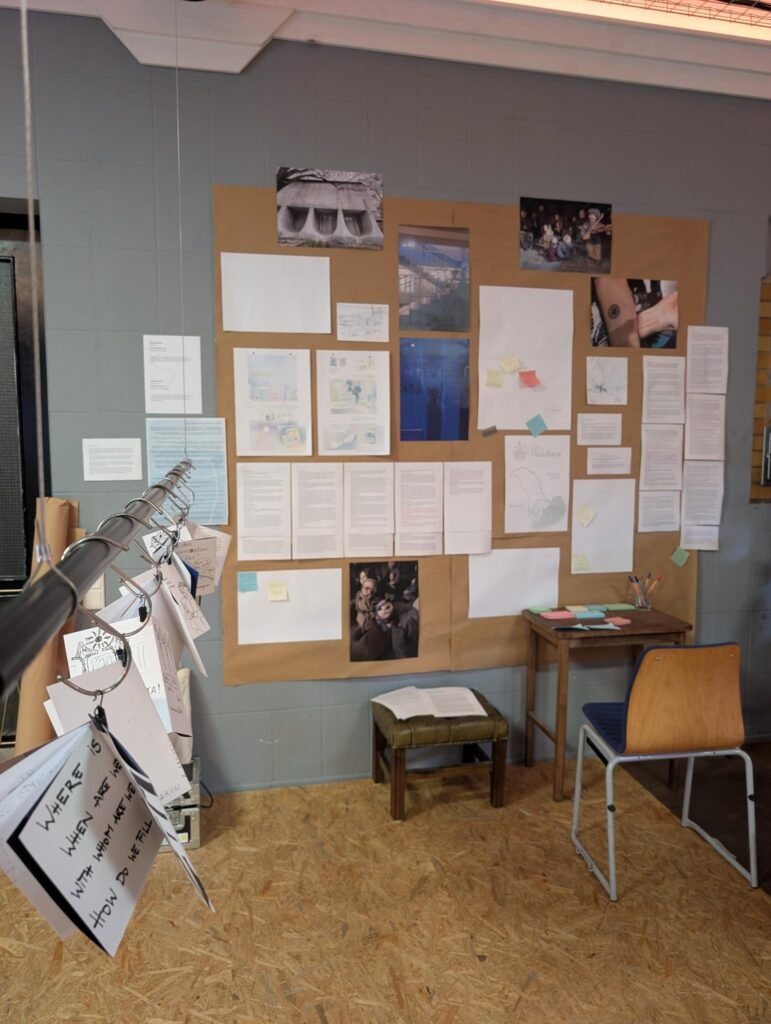
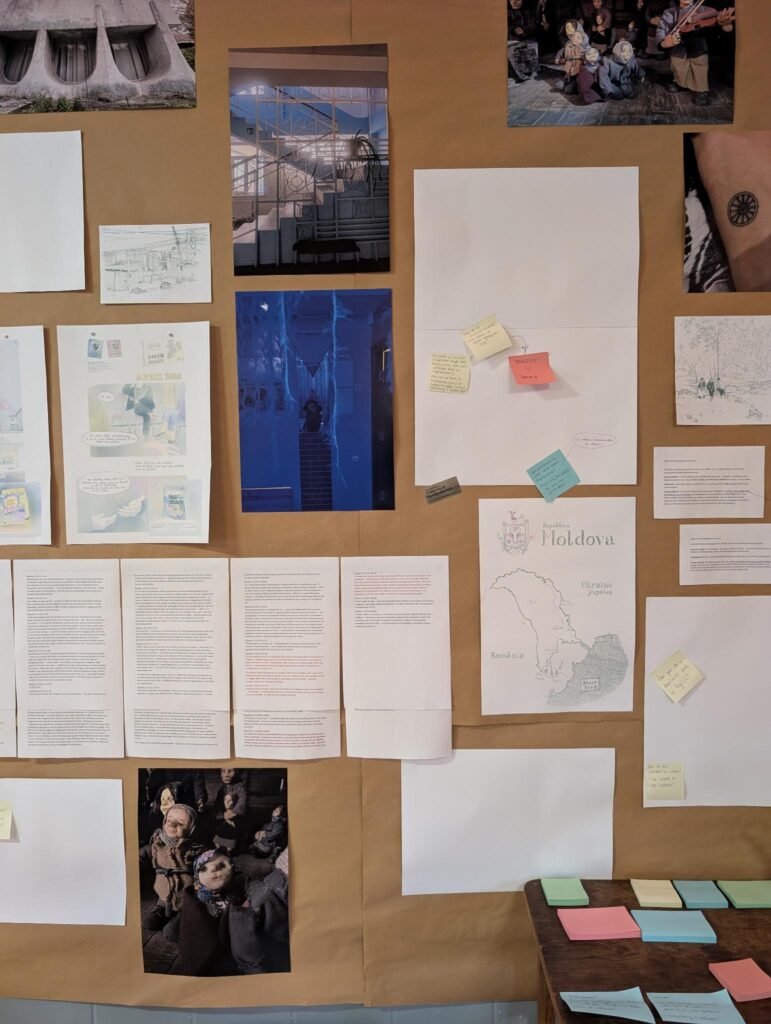
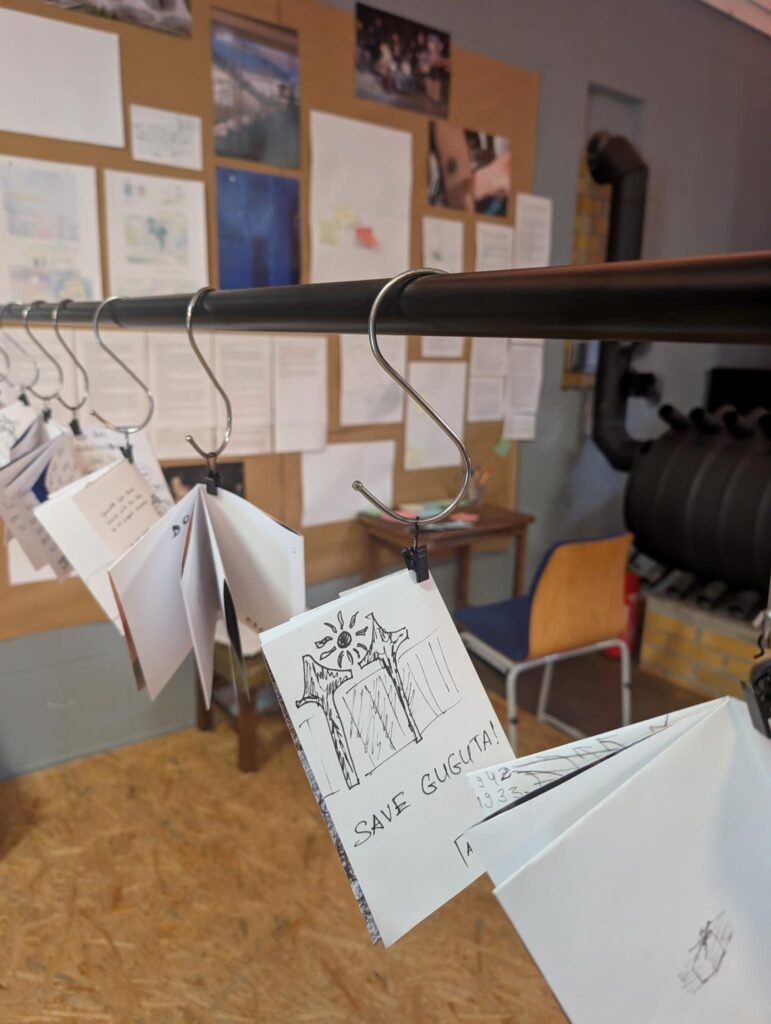
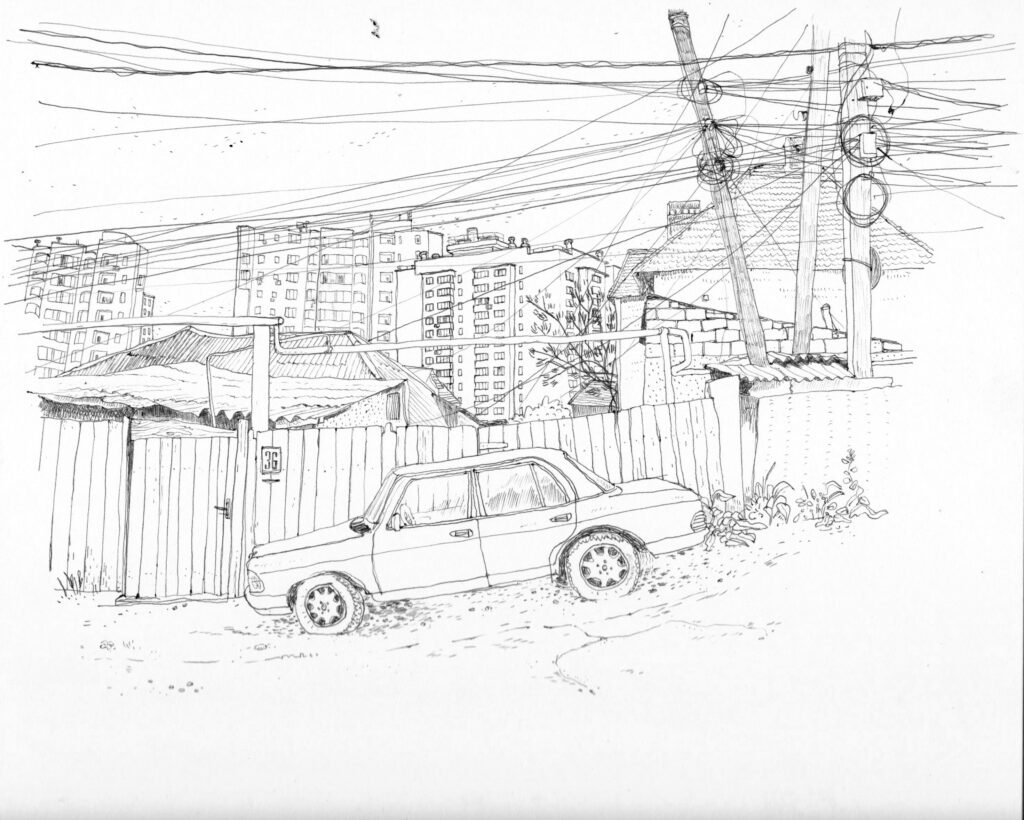
Glimpses from in between (texts and drawings)
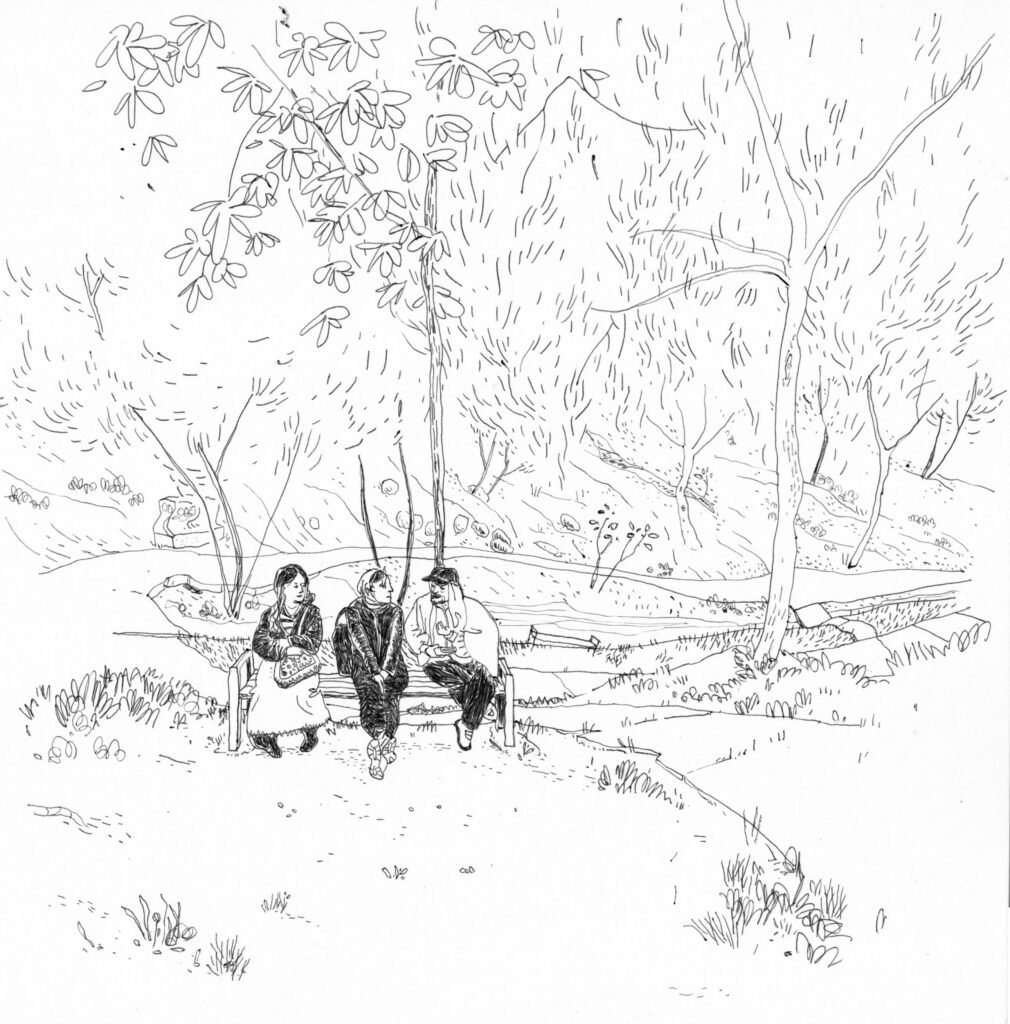
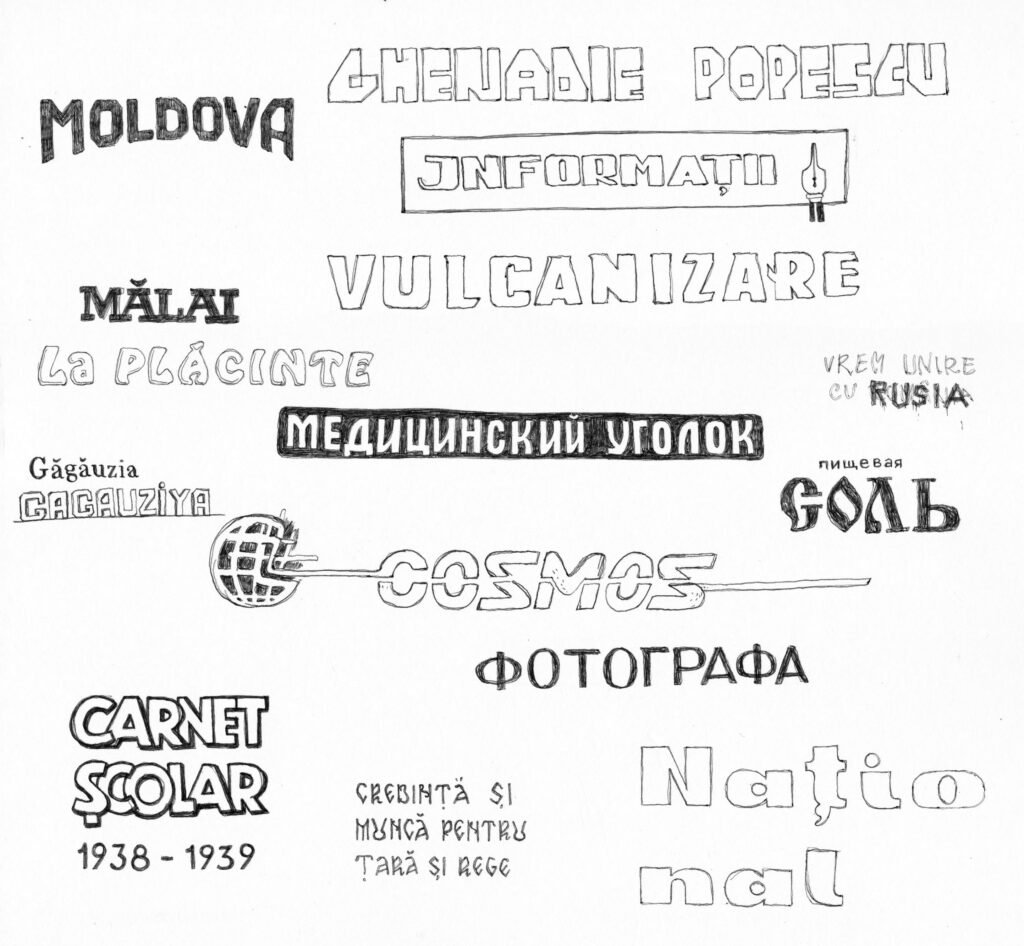
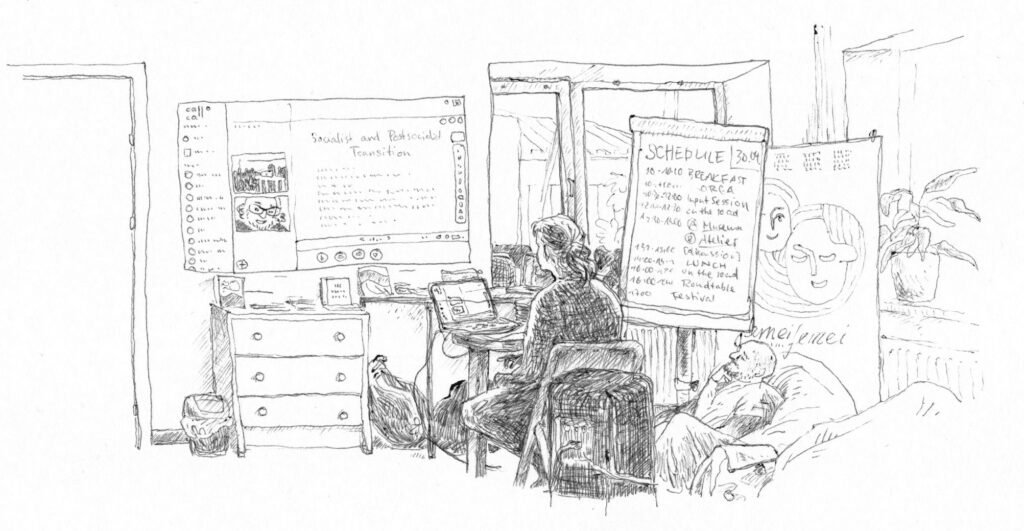
Paula Mittrowann is an illustrator and educator who lives in Hamburg, Germany. She collaborates with Cultures of Remembrance on educational trips and exhibition curation, and captures her thoughts and experiences in sketches and graphic novels. The drawings were created during the “Decolonizing Cultures of Remembrance” event in Moldova in April 2026 and as a reflection in the aftermath.
The drawings are accompanying glimpses of talks and interviews from the educational travel in 2026.
In the ethnographic museum Chișinău, Moldova
Museum guide: I’m a Moldovan. The director of the museum – he believes he is Romanian. People believe in different things. People identify themselves as they want.
Participants: But this is also the official dominant narrative also, no? Isn’t this problematic?
Museum guide: I completely agree with you. I believe diversity is the only way for Moldova to survive. The only way. To question what is told in school and how it relates to what we can actually learn from the objects of the museum is so important. In the end everyone creates their own story. And what I tell you here is also my story of a bigger one.
Genadie Popescu – Interview
…he was born in 1971 in Floresti, Moldova, and lives and works in Chișinău. He studied at the Academy of Music, Theater and Fine Arts in Chișinău. He is known for his performances, paintings, videos and video animations, which he exhibits mainly in Moldova, Germany and France. Ghenadie Popescu’s work highlights the absurdity inherent in the world we live in. Influenced by his country’s political history, he reflects on the post-Soviet human condition.
Interviewer: some of the figures have dark skin — is that intentional, referring to the ethnic diversity of Soviet society?
Genadie: Yes. It reflects that Soviet people weren’t only Slavic or Russian — there were people from Central Asia, from the Caucasus, many different ethnicities. It relates to the Soviet idea of forging a “new Soviet person.” The skin tone isn’t meant to be very dark — think of someone from Central Asia, or a Kalmyk from the Caspian region. This diversity is partly a legacy of the colonization carried out by the former Russian Tsarist empire — Russia inherited that whole territory and all its peoples.
Genadie: The most important part is the armature — the skeleton. It’s made of wire and joints. This tie-down mechanism is crucial — I have to drill it each time I reposition the figure. [He demonstrates a ball-and-socket joint.] This kind of joint lasts a long time. The fingers are made of wire. The eyes are just beads with a hole through them, so they can turn left and right. The hair is made from thread.
Interviewer: When did you actually start this work? Are you still employed as a restorer, or is that in the past?
Genadie: I’m still working as a restorer — I need this space. Otherwise I don’t know how I’d manage; rent in Chișinău isn’t cheap. The animation work and my restoration job coexist — the people here let me use the space, otherwise it would be hard to justify staying and working here for such low pay. It’s a kind of mutual arrangement. They tolerate it, but technically I’m here “illegally” — there’s no formal paperwork allowing me to use the space this way, or to host visitors like you.
Interviewer: Do your superiors know about this work?
Genadie: Yes, they know — otherwise it wouldn’t work at all. It’s fine for me to host foreign guests; this is a public space, that’s not a problem. [A phone call interrupts — a colleague, Valentina, is looking for him.]
Interviewer: Can you briefly explain — which years do these four testimonies cover?
Genadie: One is from 1941 — the first major deportation. The other three, the largest wave, are from 1949.
In 1949, the main focus was forced collectivization — pushing people into collective farms. Before that operation, only around 12–15% of the population was involved in collective farming. After this one operation — which took just a few weeks — that number jumped to 95%. It was extremely effective at “persuading” the rest of the population. The people who were deported were typically those with larger, more prosperous households; their property was folded automatically into the collective farms.
Interviewer: Was this deportation based on ethnicity?
Genadie: No, not specifically about ethnicity. For example, one of my subjects, “Tishina,” was Jewish — but that wasn’t the criterion. The 1941 deportation happened right after the Molotov–Ribbentrop Pact, in newly annexed territory. It was essentially a “cleansing” — anyone connected to the former (Romanian) administration, all local political and social elites, were removed. The same happened in the Baltic states and in western Ukraine, wherever new territory was annexed.
It was especially brutal because adult men were separated from their families and sent to forced labor — in mining, in the far north — and many did not survive.
Then, as I mentioned, 1949 was tied to the economic strategy of collectivization.
The last and smallest wave was in March 1951, and targeted religious minorities — Jehovah’s Witnesses, some Neo-Protestant groups.
The largest wave, in 1949, deported around 36,000 people.
Interviewer: Have you thought about narrating any of this in Russian as well?
Genadie: Naum Kleiman, does speak in Russian — he’s a Russian speaker.
Interviewer: Using Russian material more broadly could also be a way to reach that audience directly.
Genadie: Maybe — because then you’re also addressing the perpetrators, in a sense, or at least their descendants and their language community.
I made a separate animated piece on this same topic, called Naum, Naim, Cat. I submitted it to several festivals with almost no success — that’s just how it goes sometimes. But there is a documentary festival in St. Petersburg, Message to Man, where I submitted it before the war [in Ukraine] started, and it was actually selected. There are almost no spoken words in it — only a single sentence in Russian. I was surprised it was accepted, because this topic is effectively banned or sidelined in Russia — it doesn’t get shown there, but I see it as a way of opening a dialogue with other countries that share a similar history of Soviet/Russian repression — Ukraine, for instance.
I also submitted it in Poland and the Czech Republic — countries that experienced similar things under Russian/Soviet rule — but without success there either. Competition is strong, and maybe it just wasn’t the right fit.
Interviewer: You trailed off saying “it’s not so…” — what did you mean? Why do you think it wasn’t accepted?
Genadie: There are only a handful of festivals genuinely focused on this kind of world/documentary history, and I simply wasn’t selected — not rejected outright with a reason given, just not chosen.
Interviewer: How has it been received here in Moldova, when you’ve shown these films?
Genadie: Local audiences here are generally already familiar with this history, more or less — there’s less shock or surprise involved.
Interviewer: More specifically: is remembering the cruelty of the Soviet era — the colonization, the deportations — sometimes used, as far as you can tell, to justify a narrative that Moldova simply has to move on, become European, and let capitalism “take over,” rather than engaging more critically with that history?
Genadie: That’s a fairly narrow slice of society that actually engages in this kind of debate. Most people just try to survive, to set that history aside, live their lives, and raise their children properly. The people who do engage in these discussions — I count myself among them, somewhat — I’m not really able to fully immerse myself in that debate either; I’m somewhere between it and the people focused purely on day-to-day, basic needs.
As for how my own generation relates to this past — I was in the Soviet army right as the USSR collapsed, between 1989 and 1991, right in the middle of it. At that point I still identified, more or less, as a Soviet person. My interests were oriented toward the Far East [of the USSR] — I’d actually traveled there once, at 17, and felt I understood, in some way, what that world was.
When the collapse happened, I was still in the army. Coming home afterward was disorienting — everything that had pointed toward a shared future simply stopped functioning, and it led into a period of severe poverty. The younger generation, who grew up already connected to independence and the new state, relates to all of this quite differently — I can’t really speak for how they experience it.
Interviewer: Have you engaged with the Soviet period in your own artwork before this project? You said you started this specific project in 2012 — what were you doing before that?
Genadie: Before animation, I trained as a painter — informally, without official schooling. But I can show you something else I made that touches on questions of identity. [Shows a video piece.] This shows the entrance to an administrative building — the double-door system used to keep the building warm in winter, so people pass through an airlock-like space between two sets of doors. This location is in Moldova — it’s “mine,” in a sense. The people passing through are mostly my own colleagues, on their way into the building; I didn’t direct them — it was during a break, and I simply let the flow happen organically.
They knew I was there, but I hadn’t told them in advance what I was filming; some asked what I was doing, and I just stayed there for about half an hour with the camera already set up. The video relates to ideas of independence and identity — I placed a small marker or inscription in the space, and I was careful not to let people notice it directly.
Final Discussion Educational Travel Moldova – Decolonizing Cultures of Remembrance?
[Speaker 1] (0:03–0:24)
Yeah, I think this messiness — the messiness of continuation — is, for me, my thought right now. And maybe also the acceptance of that, I don’t know.
[Speaker 3] (0:25–0:32)
We agree that decolonized culture should be messy and chaotic.
[Speaker 2] (0:33–1:15)
For me, that’s kind of part of having it as a grassroots project to start with, because the state usually is really rigid in how it functions, and especially the inclusion of minorities takes forever and always fucks something up along the way. That’s why I see this more as an anarchist-like topic in this regard — involving minorities in an already colonized place would have to be pretty much a horizontal project.
[Speaker 1] (1:17–1:37)
So you don’t think it’s possible to implement decolonized practices into the state or other institutions? Because that’s a different term — it’s not about including practices, it’s about a decolonized culture that has already happened, and now we are…
[Speaker 4] (1:48–2:37)
I’ve heard, time and again, “nothing about us without us” — I think that’s a crucial part when we’re talking about remembrance, archives or something. It’s important that the voice you hear is the voice from that group itself, so we shouldn’t generalize or let the state be the voice of everyone, or try to unify remembrance and practices. Each group should be doing it themselves.
[Speaker 1] (2:38–2:40)
It has to stay partial and personal.
[Speaker 3] (3:34–3:57)
I think we could also add that this new decolonized culture should be public — not closed off, but accessible — and that there shouldn’t be a state moratorium controlling this public memory, whatever it ends up being.
[Speaker 2] (4:27–5:37)
Responding to your point — I think it’s quite important to consider how slowly the state usually responds, and how tied up it is in bureaucracy. For any real change, you can potentially implement practices that are already happening in society instead. When it comes to culture, I don’t see culture coming from above, dictating what “our language” exactly is — dialects and other languages are so often erased that way. It’s a kind of state repression, in the sense that everything gets standardized. That’s why I’d rather see grassroots activism and organizing — even some museum work, which might have state funding but is organized more broadly and isn’t centralized. I imagine decolonization happening more on that level than from the top.
[Speaker 1] (8:19–9:14)
Responding to what you said and described — because I work a lot with state organizations, standardized organizations like museums and archives, it’s interesting to think about how they should be if they’re not using decolonized practices. For me it’s important to be transparent with all information — how they organize themselves, why, and so on — being accessible about that information. I think the grassroots organizations and practices you described are already like that.
[Speaker 2] (9:18–9:53)
Yeah, I think we agree on this — it’s more a matter of how I see it happening. Eventually there would be some kind of middleman between the state and this more DIY, so-called organizing — different projects, different NGOs working with activists, engaging with the state as messengers from the people.
[Speaker 1] (9:56–12:10)
I think what happens with this top-down structure is that the top decides how we speak about the past and about memory, and it becomes very elite — like, “okay, this is the proper way to do it.” A lot of people feel like they can’t be part of it, and then they lose interest — and so many people are not interested, and that’s a problem. I think if there weren’t such a big gap between grassroots projects and state institutions — because grassroots projects are seen as less serious — it would turn fewer people away from engaging. But I also think it’s one duty of the state to give voice to minorities, because not every group has the means to speak loudly. The state is also responsible for supporting minorities in that sense — otherwise you could end up with whichever group within the grassroots is louder or more educated becoming more public, without any kind of balance. I don’t know how exactly, but I think that’s an issue too.
[Speaker 2] (12:12–14:00)
A good example of how the state disregards decoloniality is Finland with the Sámi activists — they have a council, and there are equivalent councils in Norway and Sweden, but I don’t think the Finnish state fully recognizes this council. Overall, a lot of Sámi rights get disregarded easily — deforestation, road-building, land being taken, indigenous rights ignored. There was also a case — I think it was Sweden returning bones and cultural objects to Finland — where they didn’t even pay for full postal coverage, so the shipment got stuck, I think in Turku, near the sea. Since it involved Sámi, northern indigenous groups, it had to be shipped all the way to Rovaniemi and beyond, which costs a lot — but Sweden basically said “we’re returning it, we don’t care, you deal with it,” and Finland wasn’t prepared to handle it because there was no procedure in place.
[Speaker 1] (14:01–14:02)
It’s just chaos.
[Speaker 2] (14:02–14:32)
Yeah, because neither side thought it was their responsibility — “we didn’t steal the bones, so you have to pay.” There was a lot of arguing between the states. For me, that’s another example of how ridiculous it can get — people trying to get the remains of their ancestors, of their family, back, and the state just fails them. Remembrance gets stuck in this bureaucratic machine.
[Speaker 1] (14:34–16:37)
For me, this is an expression of how organizations that should be decolonized still have certain access points where you can intervene. I think museums, for instance, could be such spaces. [Referring to what someone said earlier] about state recognition of women — as soon as a minority or an issue that hasn’t been talked about gets recognized by the state, it gets memorialized, it’s on the agenda, it’s visible. So there should be some kind of relation — a relational practice between state organizations and grassroots organizations. I don’t see it working purely through the state. We’re talking about the future here — I don’t see a decolonized culture taking the form of a state in any way, because, as you said, it has to be connected to the land and to practices that are personal to people — partial and personal. As soon as you have what I know as state structures, it disconnects you from that knowledge and that ongoing relation — it creates a body of organization detached from actual engagement.
[Speaker 2] (16:38–17:11)
On top of that — if someone is a representative of an NGO that gets state funding, the state puts limitations on what kind of work you can do. That cracks up a lot of relationships, because you become so dependent on that funding and recognition. That’s also why many grassroots projects don’t want to go into the murky waters of financial dependency.
[Speaker 1] (17:12–19:16)
I think a state can’t be messy, can’t be personal, and can’t be non-binary — that’s why it’s so hard for me to imagine this together. [In response to disagreement:] It’s about the future, about how it would look — and I think this is something we’re working towards too. I would love for the work we’re doing to have an impact. There are programs — like the 360° project we had in Germany — where museums tried implementing racism-critical programs together with people from minorities. I know about that conflictive relationship, but I think maybe that’s also part of it. I totally agree with you, and I’m also looking toward a more revolutionary future — but this is how I look at it, and I think it’s part of what we have to work towards too.
My other point is about group size — when you think about small groups, groups that can meet face-to-face, how big is that group? Is it 5,000, or 20, or 60? There’s so much to think about, now and in the future, in finding structures for organizing bigger groups. I think that’s an important issue.
[Speaker 2] (19:16–19:49)
I think we can learn from the Zapatistas. There are so many great examples of how people organize on a bigger scale, talk about their indigenous rights and their survival — I’m often inspired by examples where people organize info talks about their own experiences and manage to keep it horizontal.
[Speaker 1] (19:51–20:56)
Can I add something else? [Responding to “seeing it more from a revolutionary way”:] I always think about radicalizing myself more, because I’m always trying to moderate — that’s the field I work in, and it’s difficult sometimes to be truly radical. But there are attempts — there’s this existing “Radikal Demokratisches Museum.” What is it, a radical democratic museum — what does that look like? I’m not really able to express what being radical would mean as a practice, but somehow it’s about radicalizing. It’s just a feeling, it’s not finished yet.
[Speaker 3] (20:57–22:26)
Maybe that connects to my thoughts on this — maybe the background is that you don’t trust the process will build itself in a logical, rational, positive way with state culture — with centralization of memory in cooperation with the state. Because the state is a centralized thing that creates narrative from the power that got elected, and historical narrative always ends up built around the idea the state wants to provide. If the state leans authoritarian, the narratives of minorities and cultural differences will slowly get erased in the name of unity and nationalization. So even radicalization, in this sense, is really about not trusting that the process will unfold positively on its own — and putting the responsibility back on yourself. Maybe it’s less about seeing a revolutionary future and more about a future where you, as a horizontal collective, take responsibility for the memory you create.
[Speaker 1] (22:30–23:35)
“Nothing about us [without us]” — intersectionality, I wanted to mention that too. That’s my point of reference here — I can’t imagine this existing inside something else that oppresses other things in life, because it’s all connected.
[Speaker 1] (23:36–26:42)
[On the question of trust and radicalism:] Because you said being radical is also about not trusting — I partially agree, but I also remind myself to turn it around: I want to trust in what’s not there yet, what I want to build, what I want to see in other people. That’s also radical — trusting that something is possible is quite radical in itself. So maybe the way around distrust is radical trust.
[On whether state organizations can change:] I think they can change, yeah — but I don’t think that would work together with what we’re describing. For me, decolonization is tied to a bigger shift in how humans relate to each other and to the world — behavior, mindset, and how we organize, all together.
[Speaker 3] (26:45–27:11)
Maybe put more precisely: radical decolonization means taking as much of the possibility — the privilege — of distributing memory out of the state’s hands and back to the people, as much as possible. Through practices, through archiving.
[Speaker 2] (27:13–28:14)
I’d rather see it as the state trying to use some of the tools and practices that have been developed — which happens all the time anyway. I also see it as a positive thing that there are some really good exhibitions, and that knowledge spreads further. There is at least a trend of improvement in some museums talking about decolonization, involving voices, sometimes even giving people space to shape their own narrative and have authority over the question. But I still don’t see it as the main path forward — we shouldn’t wait for the state to give us permission to talk about decolonization.
[Speaker 1] (28:14–28:28)
It wasn’t quite like that — even the perspectives that are given space are given space within a capitalist, patriarchal, extractivist framework. Take the Friedrichshain-Kreuzberg Museum, or Natalie Bayer’s work.
[Speaker 1] (28:30–29:56)
I wonder, within an area with so many different groups, cultures, religions, interests and traditions — how do you organize the interaction between them, between minority and majority groups? I think this is an aspect of supporting minorities, or of exchanging knowledge about each other — and I think that kind of education is something a state is actually responsible for.