“How to Make a Common Carpet” till now is a participatory textile project initiated in 2025 by artist Tatiana Fiodorova-Lefter. The project brings together people from different communities to create a shared carpet from old clothes and textile fragments, while exchanging personal stories, memories, and experiences.
The carpet becomes both an artwork and a space of encounter — a collective process through which individual memories are woven into a shared material and social fabric.
Tatiana brings the carpets to transnational events and gatherings, where people are invited to bring old clothes or textile pieces and contribute to the ongoing process by weaving them into the common carpet. Tatiana gives a tutorial, how to do it. In this way, the work continues to grow through the participation of the people who encounter it.
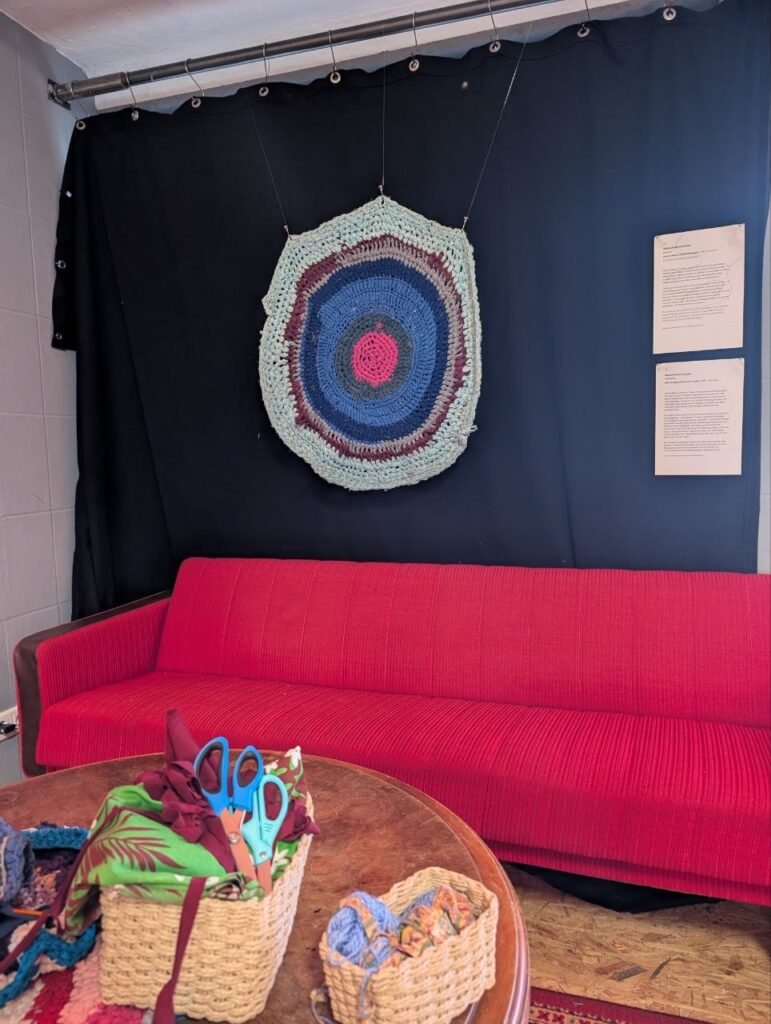
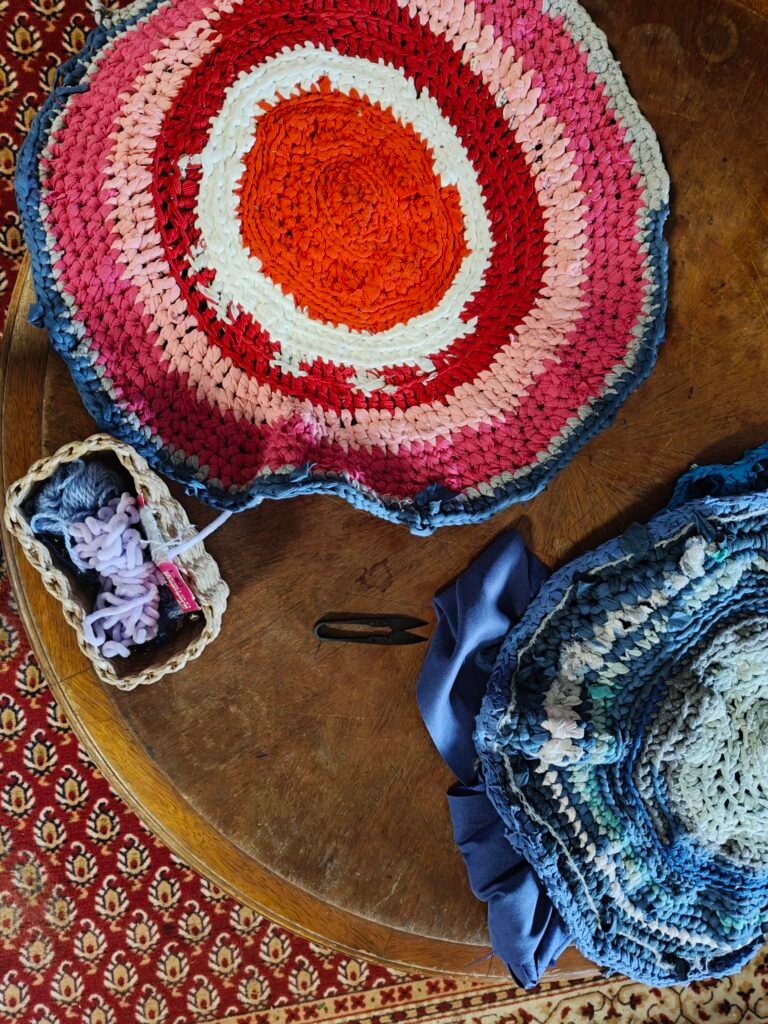
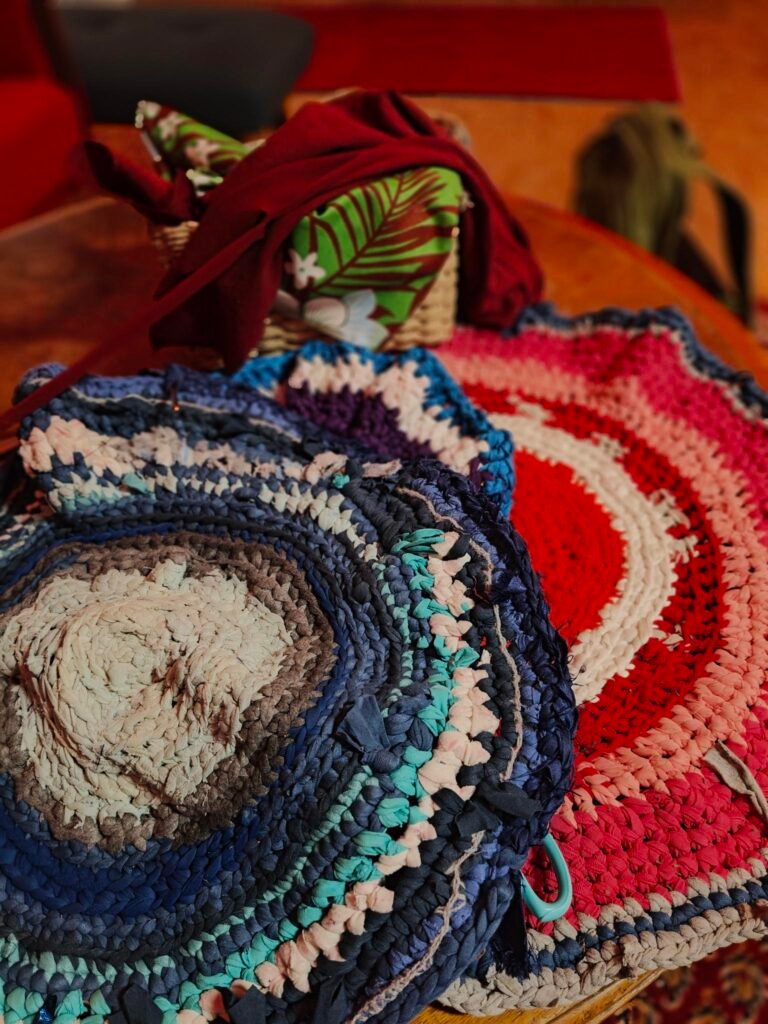
Pictures description
Some of the carpets in the pictures are finished. For example, the one that is hanging on the curtain. The others are a work in process. Anyone can join with their piece of clothing, which carries a memory. Tatiana explains the basic techniques and the person can weave the piece of memory intro the carpet as its continuation. There is no limit to the size or to the color palette. Every piece of clothing, every memory is valuable and becomes a part of the common creation.
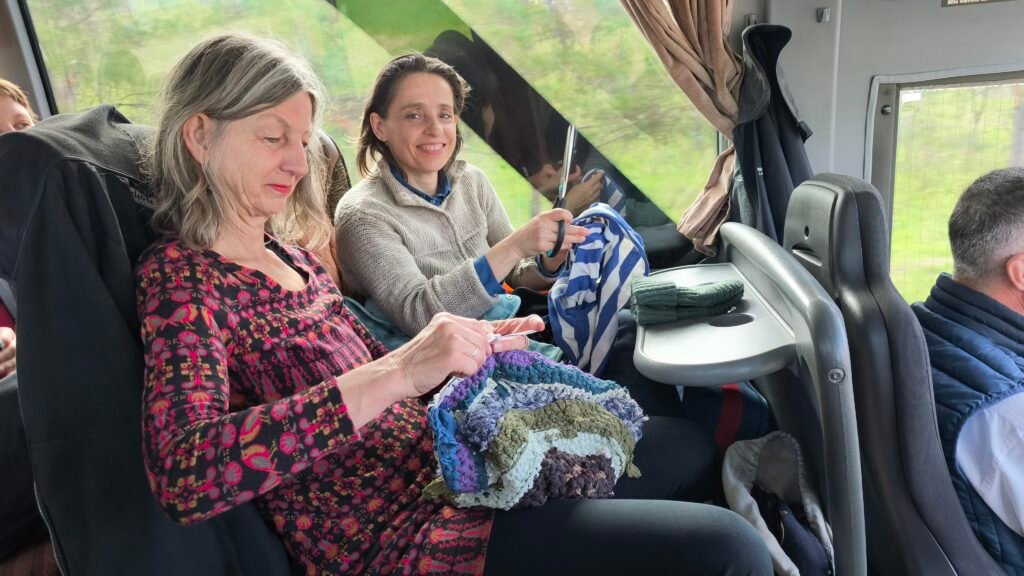
You can see a picture of the collective carpet-making process that took place in May 2026 during our educational trip to Moldova, organised within the framework of “Decolonising Cultures of Remembrance.” Tatiana herself is preparing threads for the carpet and Sigrun (whose work is also present in this exhibition and who was a participant of the travel) is already weaving the thread into the carpet. The scene takes place on the bus on the way to Gagauzia.
Common Threads Exhibition, 2026
From October 9 to 11, the exhibition “Common Threads” (Geteilte Fäden) was presented in Fürstenberg (Havel), Brandenburg, in October 2026. The exhibition is a collection of works by artists and collectives from Ukraine, Moldova, Belarus, and Germany. Some of these works were created during our educational trip to Moldova in April 2026 as part of the “Decolonizing Cultures of Remembrance” project.