In this collection of illustrations Mariam Naiem visualises the specifics of colonial trauma and grief, and the effect they have on everyday life.
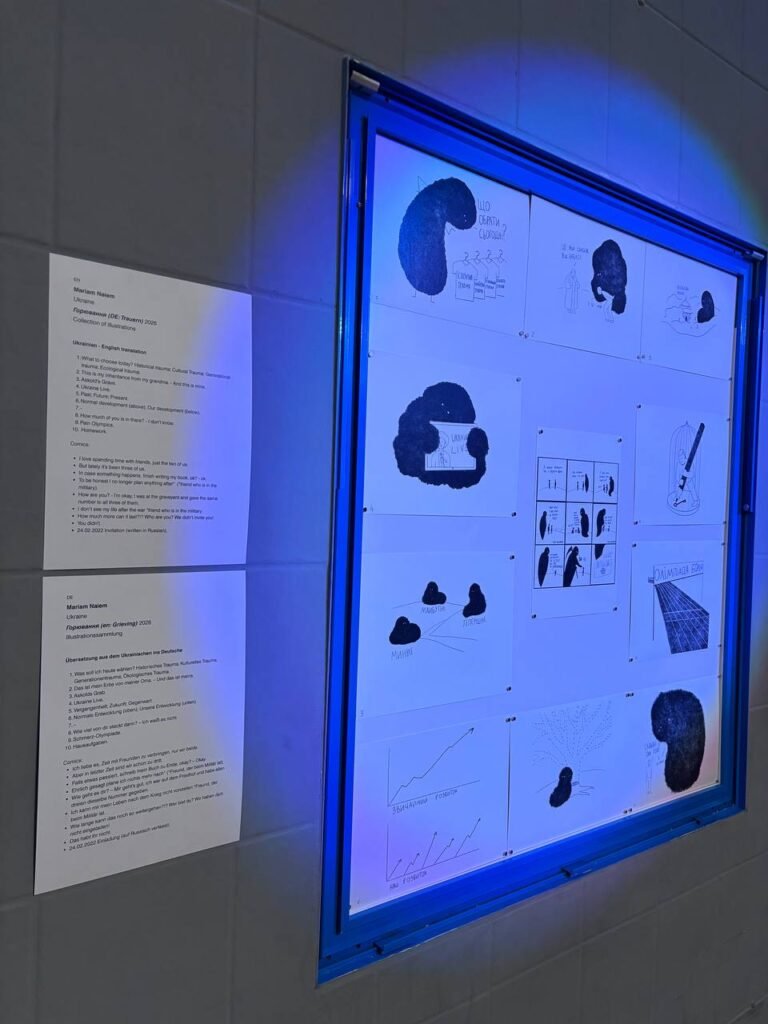
11 pieces of black and white illustrations on white A4 paper
Ukrainian – English translation
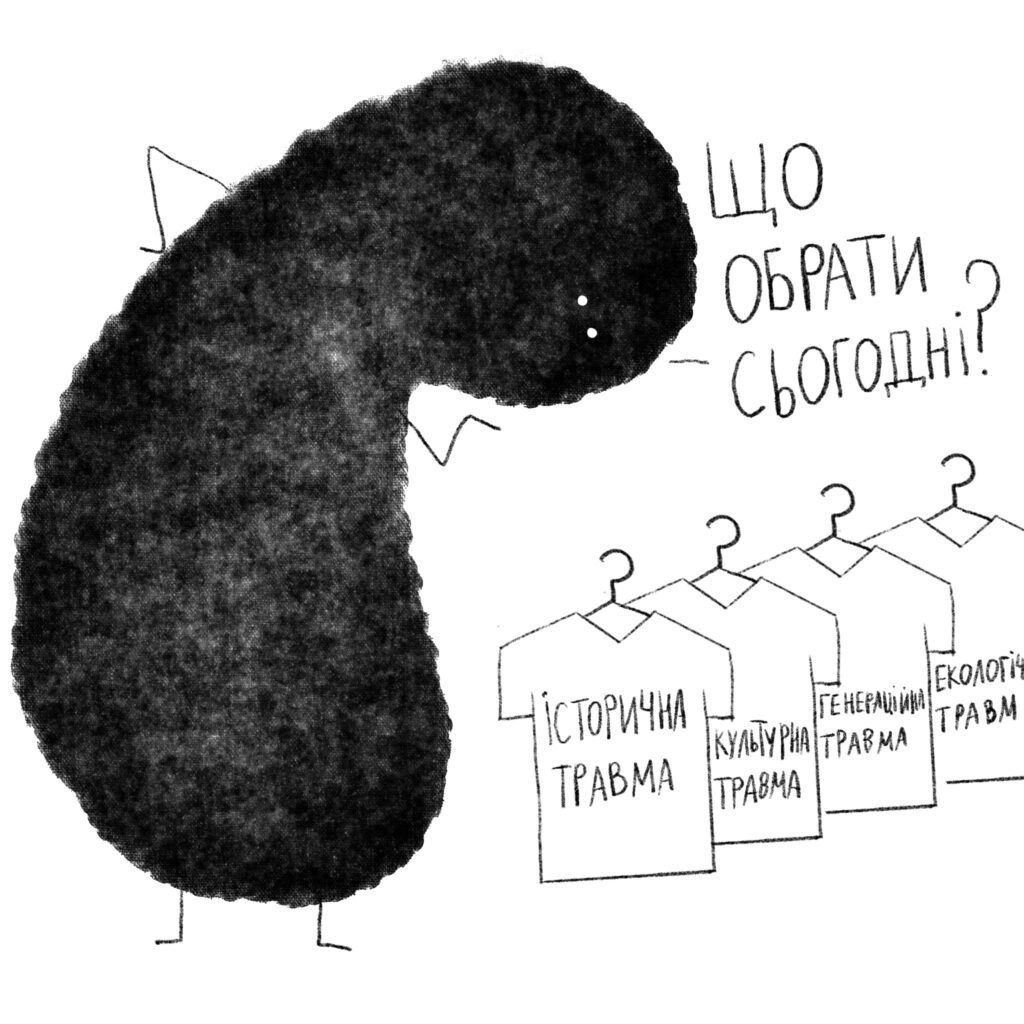
- What to choose today? Historical trauma; Cultural Trauma; Generational trauma; Ecological trauma
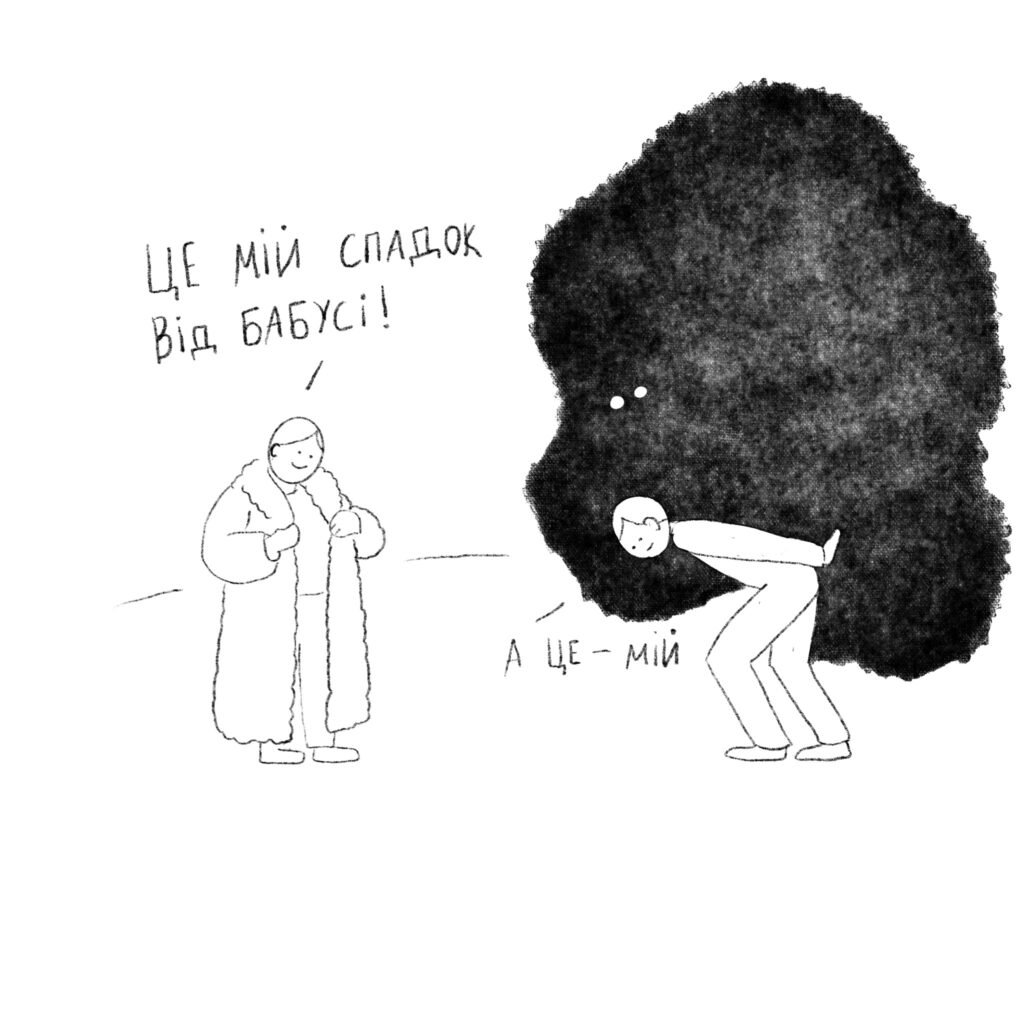
- -This is my inheritance from my grandma. – And this is mine.
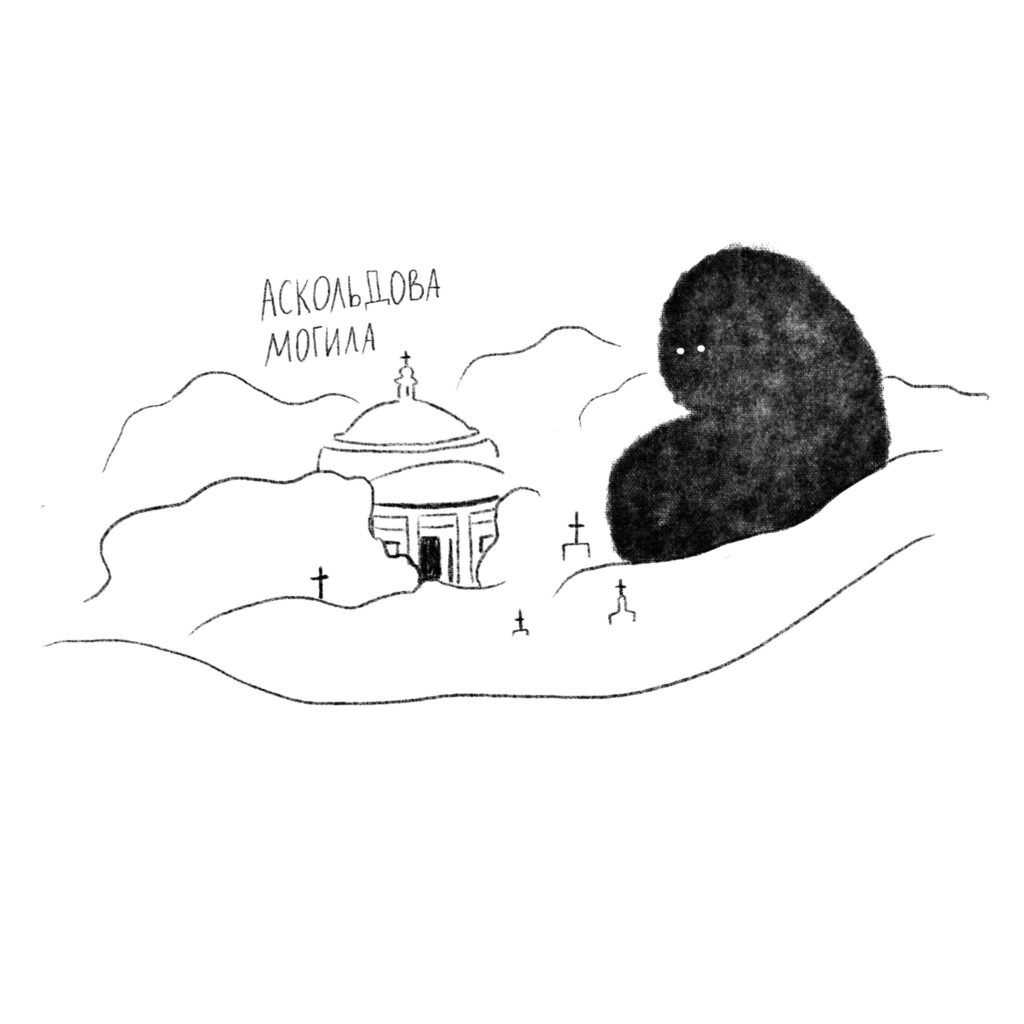
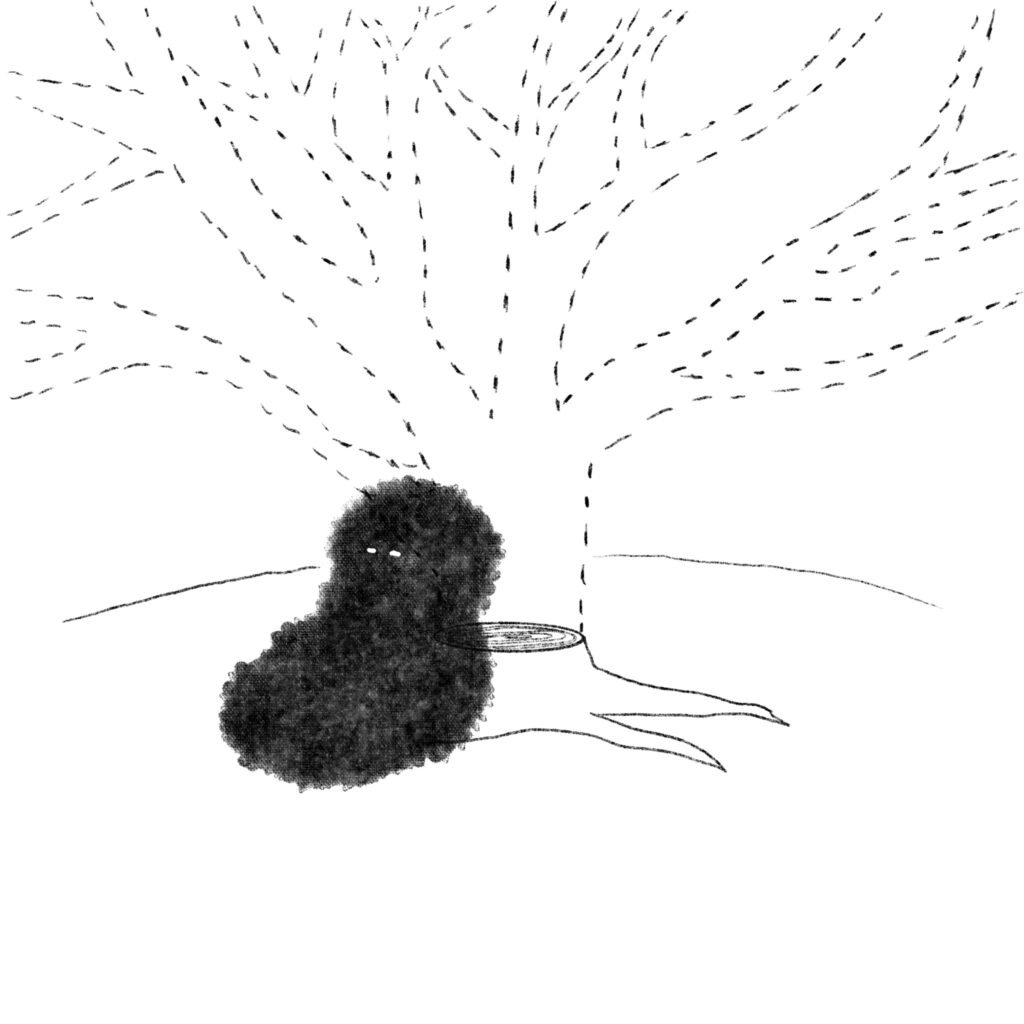
- Askold’s Grave* (explanation below)
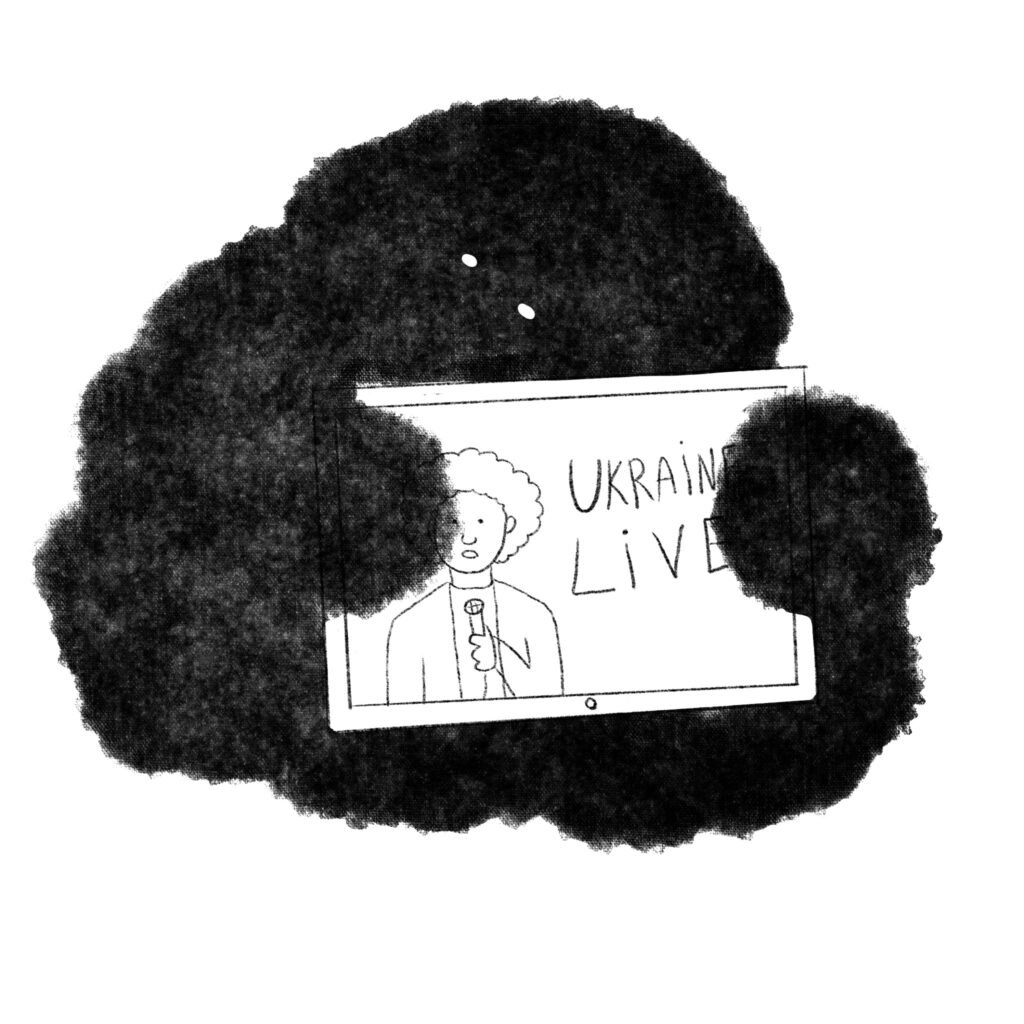
- Ukraine Live
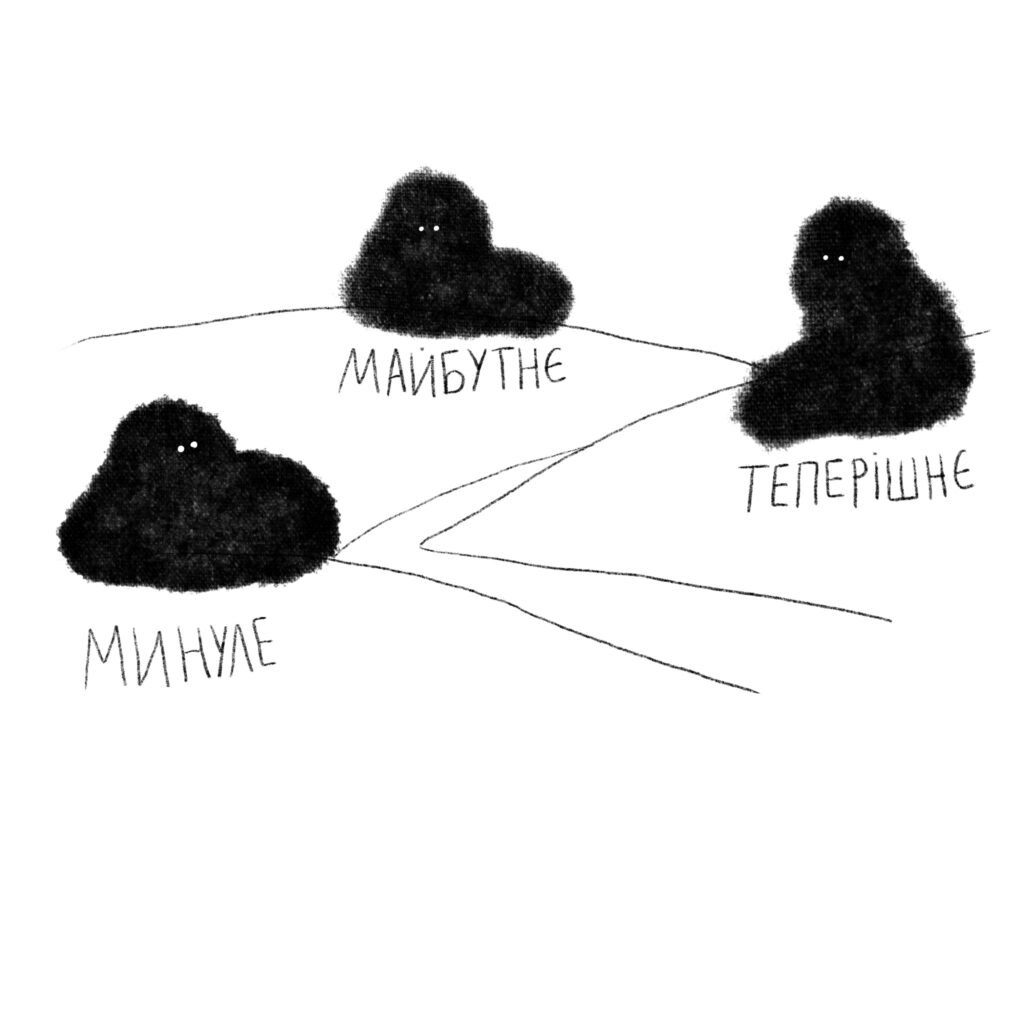
- Past; Future; Present;
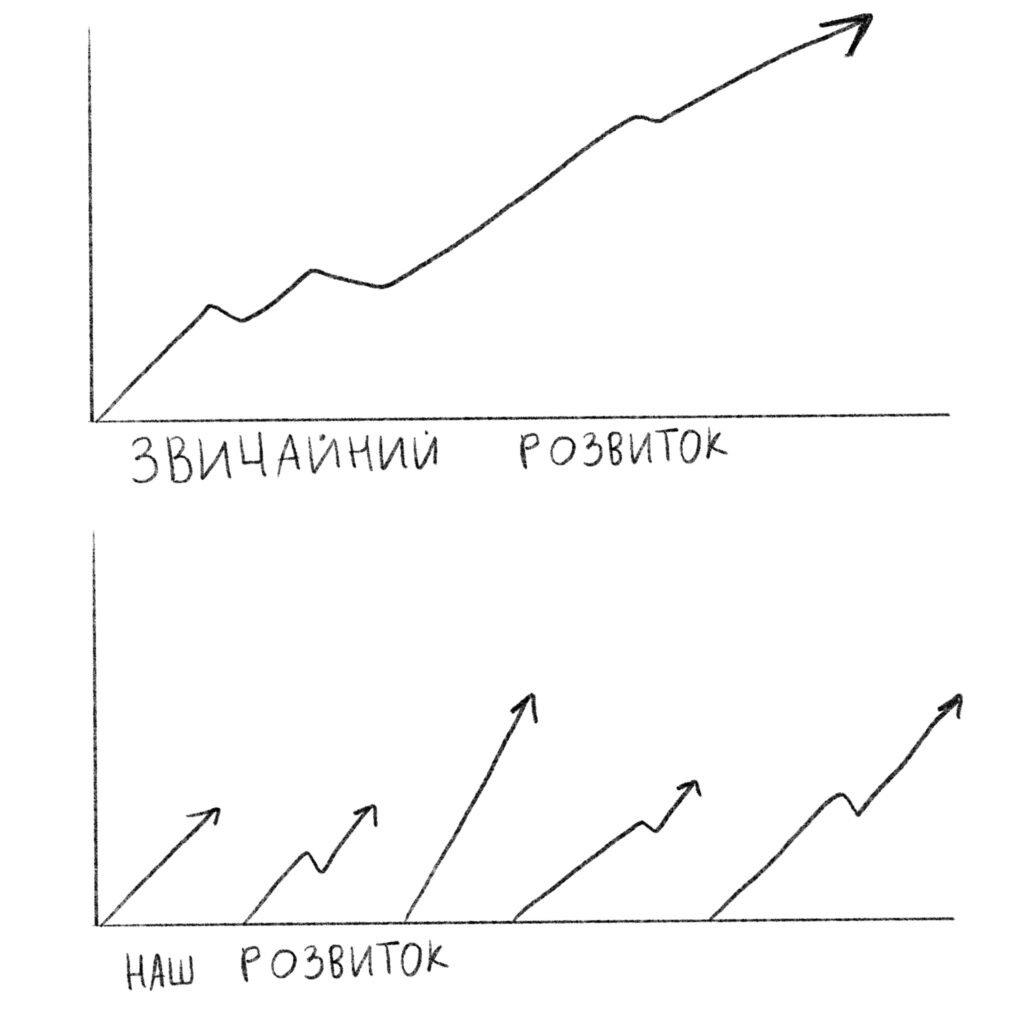
- Normal development (above); Our development (below)
- –
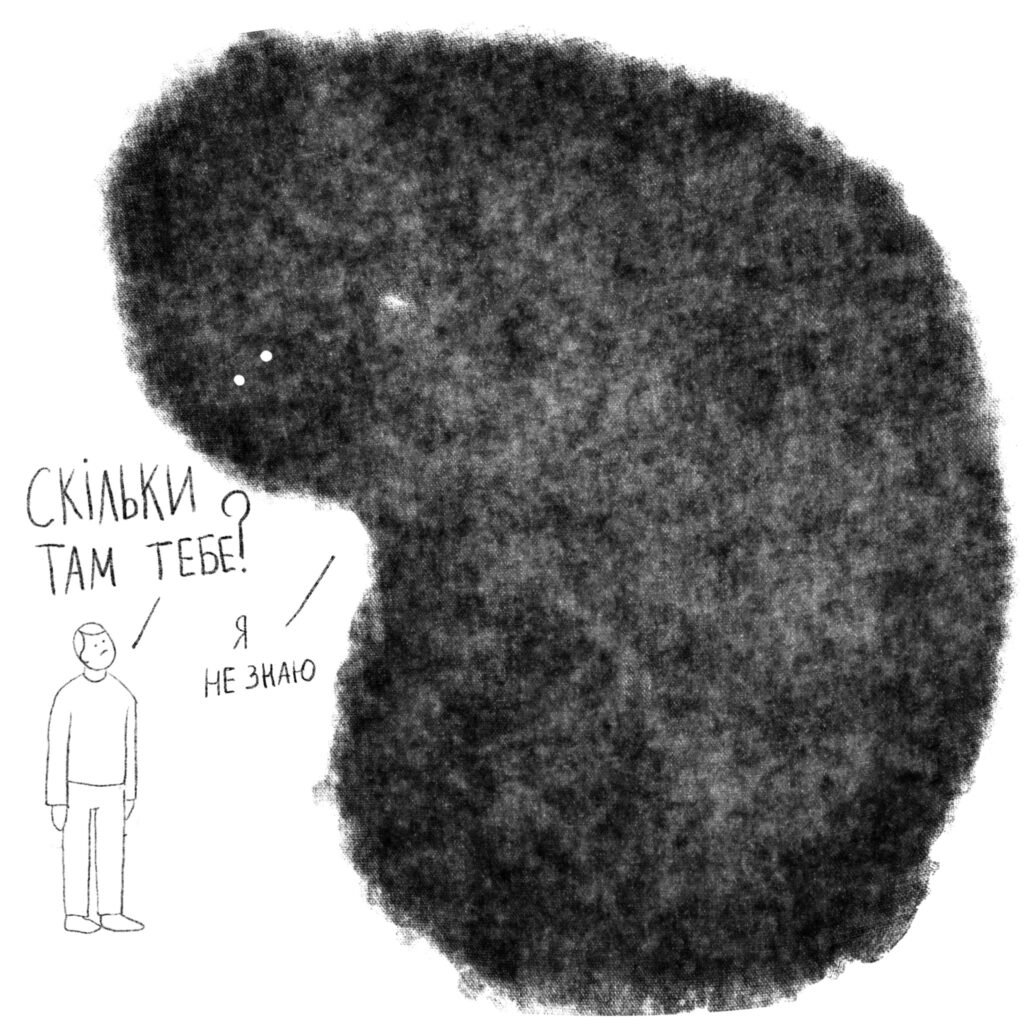
- How much of you is in there? – I don’t know
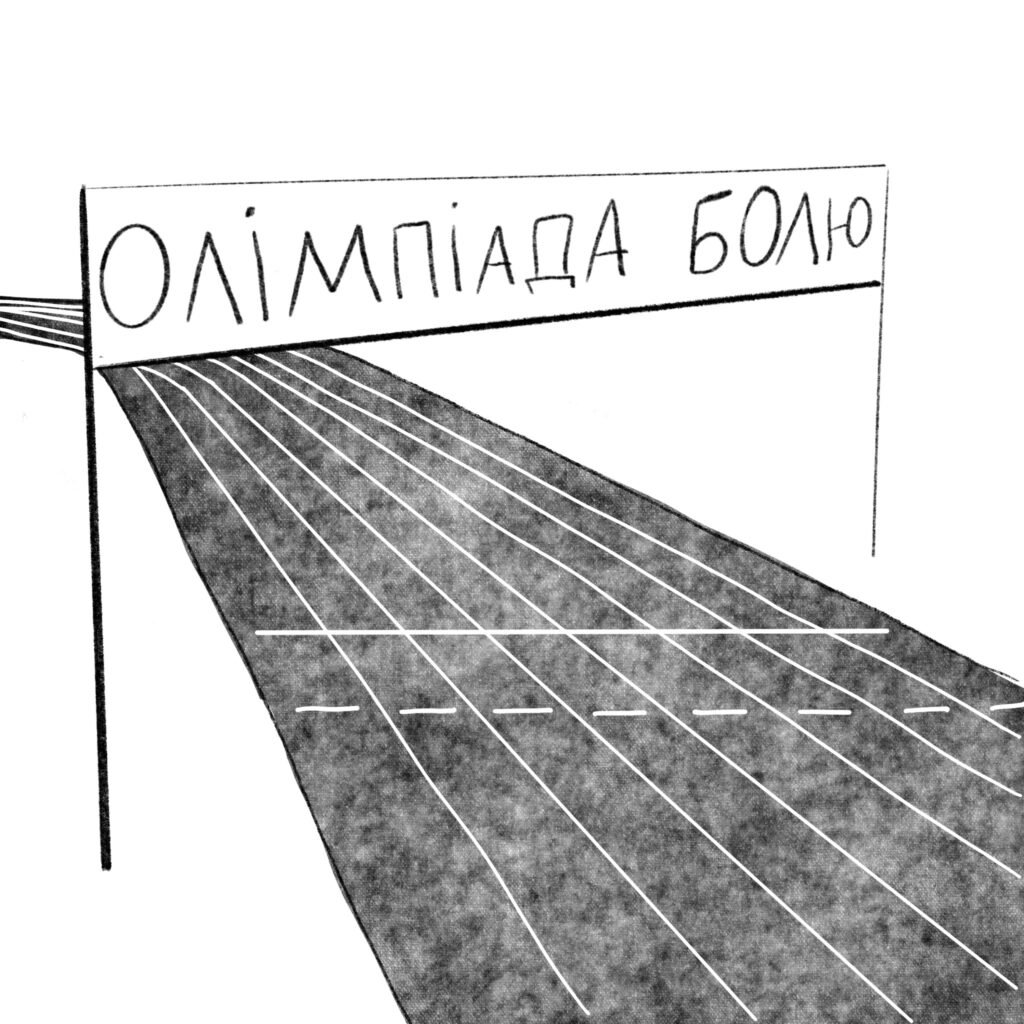
- Pain Olympics
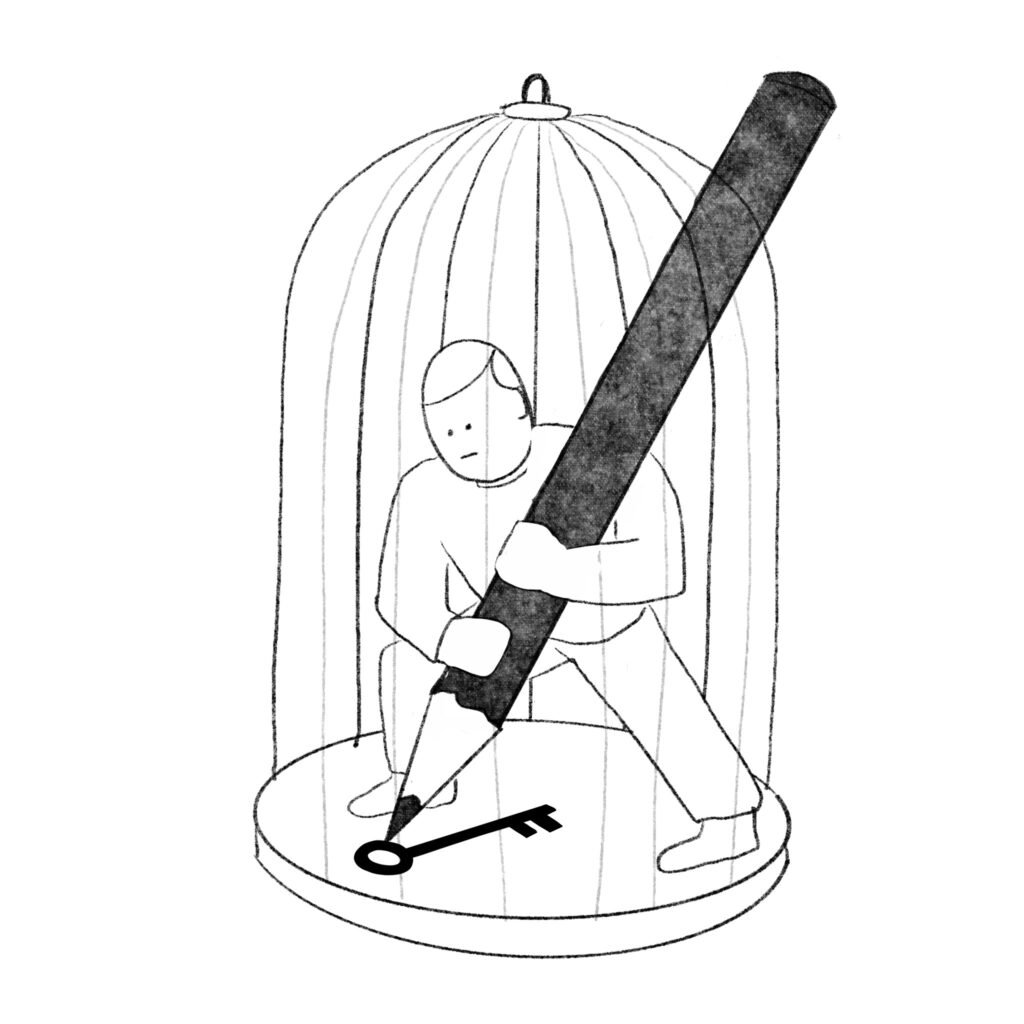
- – (illustration to the homework part of the book)
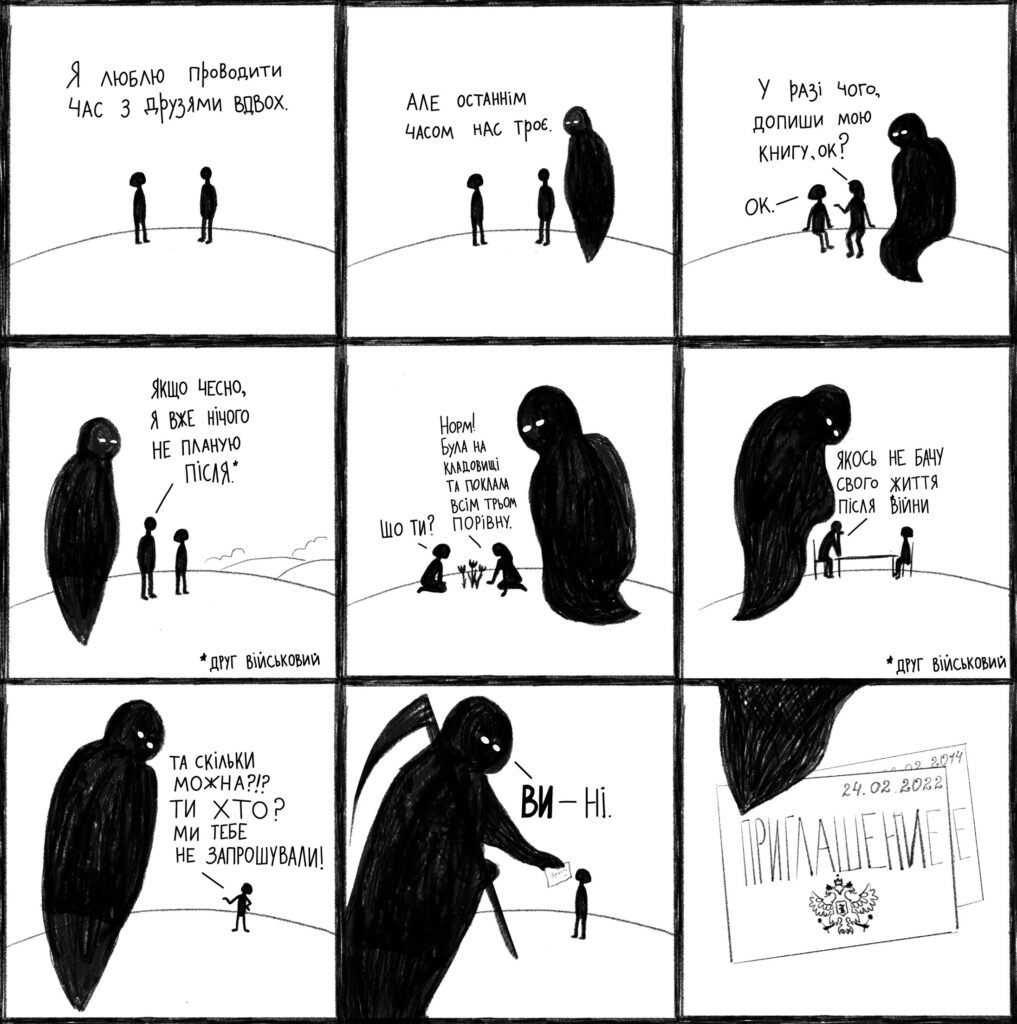
- Comics:
1. I love spending time with friends, just the two of us.
2. But lately it’s been three of us.
3. In case something happens, finish writing my book, OK? – OK.
4. To be honest, I no longer plan anything after* (*friend who is in the military)
5. How are you? – I’m okay, I was at the graveyard and gave the same number to all three of them* (*people, who died)
6. I don’t see my life after the war* (*friend who is in the military)
7. How much more can it last?!? Who are you? We didn’t invite you!
8. You didn’t
9. 24.02.2022 “Invitation” (written in russian)* (*behind the first “Invitation”, there is another one with the year 2014 visible to us, the year of the illegal Crimea annexation).
*Askold’s grave – according to the medieval chronicle The Tale of Bygone Years, the Novgorod ruler Prince Oleg tricked and killed Kyiv’s rulers, Askold and Dir, on the banks of the Dnipro River in 882 AD to seize control of the city. Legend says Askold was buried at the exact spot where he fell, giving the steep riverside slope the name Askold’s Grave (Ukrainian: Askoldova Mohyla). In Ukrainian history, the site symbolizes the early foundations of Kyiv, the arrival of Christianity (Askold is traditionally considered the first Christian prince of Kyiv), and national memory. Today, the park serves as a sacred memorial site for fallen Ukrainian soldiers
Pictures Description
Below you can find the description of the picture. It has not been written by the artist and has been added by the curators.
These illustrations are also featured in Mariam’s book, “How to Breathe Freely? A Guide to Decolonization, 2026”. The book explores the topics of generational trauma and colonial grief in-depth, and offers the reader a guide to processing this pain and taking agency of one’s identity. Mariam states: “Colonial trauma – is not a trauma from just one historic period, and just like colonialism itself, it pierces into every aspect of your life and has an incomprehensive scope. Colonial society – is a society in pain. And to continue living, one needs to comprehend this pain, confront colonial grieving, and understand how it works on social and individual levels.”
Common Threads Exhibition, 2026
From October 9 to 11, the exhibition “Common Threads” (Geteilte Fäden) was presented in Fürstenberg (Havel), Brandenburg, in October 2026. The exhibition is a collection of works by artists and collectives from Ukraine, Moldova, Belarus, and Germany. Some of these works were created during our educational trip to Moldova in April 2026 as part of the “Decolonizing Cultures of Remembrance” project.