Description
when: The event is in the past. It took place 29th of April 2026.
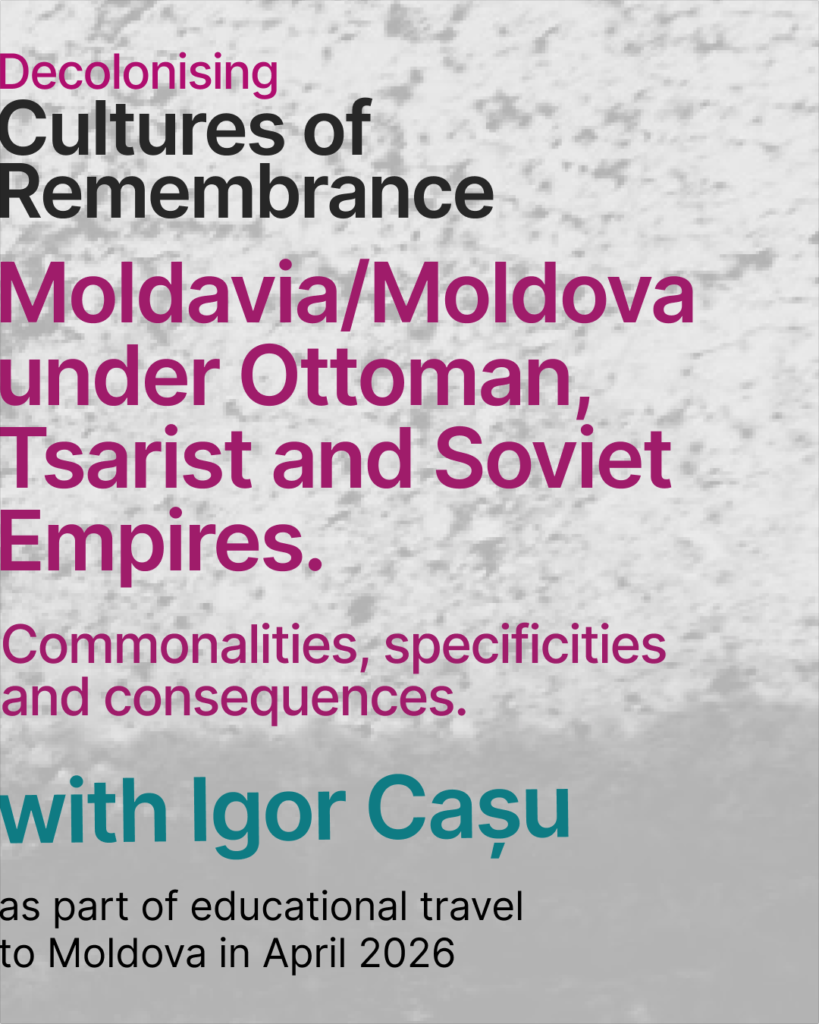
with whom: Igor Cașu
What it was about
This session is a part of the educational trip to Moldova program. With 25 participants we plan to explore the intersections of decolonisation, remembrance work, queer visibility, and activism. Initiated by Educat Collective (Germany) and commonly designed with the project partners Art Platforma (Moldova) and Moldox (Moldova), with contributions by Solidarity Collectives (Ukraine), Prismatica (Belarus), Human Constanta (Belarus), and Coopera (Germany), the program will be an opportunity for collective learning and creating.
Since not everyone, who was interested in the trip, was able to join us, we decided to make some sessions in a hybrid format. The input with Igor Cașu is one of them.
The Principality of Moldavia, created in the mid 14th century, located in the very strategic area between the Black Sea and Danube mouths in the south, Carpathian Mountains in the West, Dniester River in the East and Poland in the north, was an object of many imperial designs in the last 6 centuries. In this lecture, the speaker will discuss the subject from the viewpoint of the entangled history concept and longue durée perspective. The main issues raised will evolve around such topics as the specificities and commonalities of imperial influence and dominance in and over Moldavia from the Middle Ages to the recent past. Another aspect will pertain to how imperial competition over the eastern part of Moldavia after 1812, named Bessarabia, shaped the present-day identity of Moldovans speaking a neo-Latin language, the majority of whom belonging to Eastern Christianity.
You can check the slides here:
Support the project
If you feel like you want to support the project, feel free to donate, though 🙂 E.g. on Betterplace with a click on the following link: https://www.betterplace.org/de/projects/85789-educat-e-v-politische-bildung-in-ostdeutschland
Facilitators
Igor Cașu
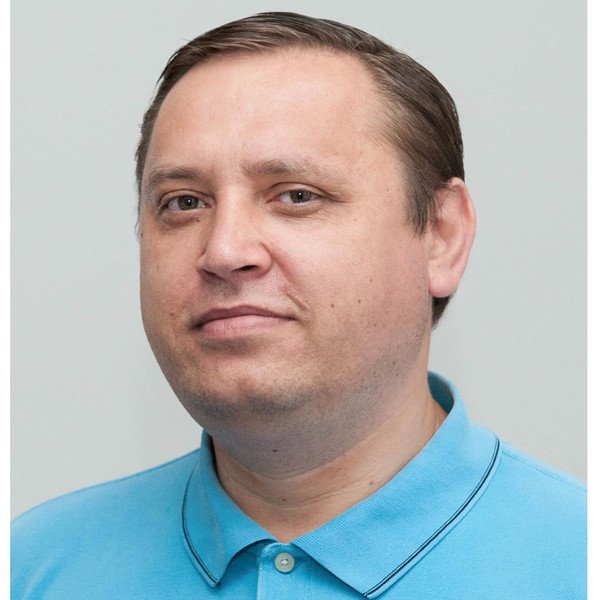
He is the director of the National Agency for Archives (since April 2022), and Senior Lecturer at the State University of Moldova, Chișinău, since 1998. In 2016, he was a Fulbright Scholar at Stanford University and Hoover, giving talks on postwar famine at Toronto University, Yale, Harvard, and Stanford. He defended his Ph.D. at Jassy University in Romania in 2000, on Soviet Nationalities Policy in the Moldavian SSR, 1944-89. His recent publications include “Do Starving People Rebel? Hunger Riots as Bab’y Bunty in Spring 1946 Soviet Moldavia”, in New Europe College’s Yearbook (Bucharest), 2020 and “Police vs. Party? Institutional Hierarchies and Agency in Soviet Moldavia, 1944-1952”, in Contemporary European History, vol. 32, no. 1, 2022. He published book reviews in leading Western journals, such as The American Historical Review, and Slavic Review.
Initiators
Educat – Educational Collective
Educat e.V. is a collective of education workers from Dresden, Rostock and Berlin, who do diversity- conscious and critical education, work on remembrance and emancipatory and experimental educational formats. Together with a lot of partners and comrades Educat is facilitating Cultures of Remembrance since 2021.
Project partners
The project has been carried and inspired by a huge network of comrades, activists, artists and educators. For the recent episode of “Cultures of Remembrance” together with Educat Collective, there is Art Platforma, Human Constanta, Prismatica and Solidarity Collectives involved as main partners.