The background of the educational trip
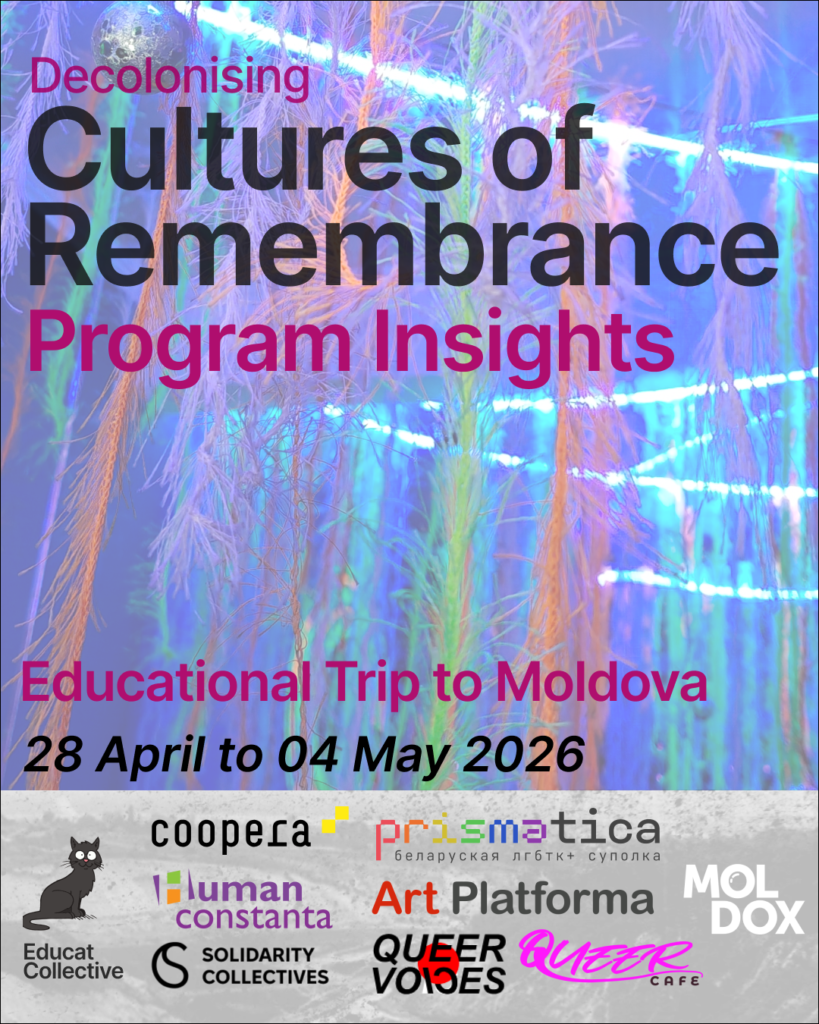
The trip to Moldova was one of the planned activities within the project ‘Decolonising Cultures of Remembrance”. The main idea of it was together with the participants to dive into the topic of Decolonising Cultures of Remembrance, trying to understand what it means and how it could look like. We also kept our focus on Queer Remembrance as big part of our program was integrated to the International Film Festival “Queer Voices”. It was and is important to connect history and past events with today’s continuities. What gets dragged from the past? What no? And why? How does it affect us? We wanted to learn about Moldova’s memorial culture, influenced by multiple empires and states, and marked by fragmented history, prolonged repression of traumatic experiences and competing narratives. To do all of that we had interactive workshops, screenings, discussions, and site visits.
We tried to diversify the learning and sharing methods during the trip. Besides well-known formats like workshops, discussions and round tables, there were also movie screenings, walks, collaborative artistic practices and interviews.
What happened during the trip
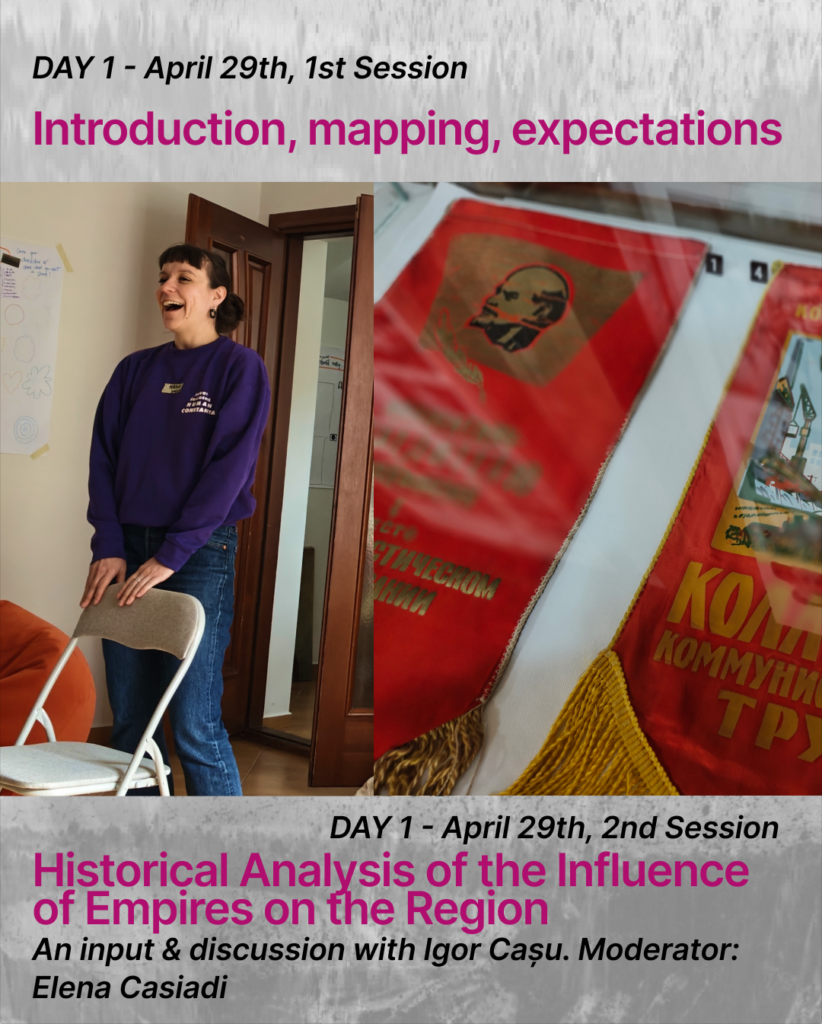
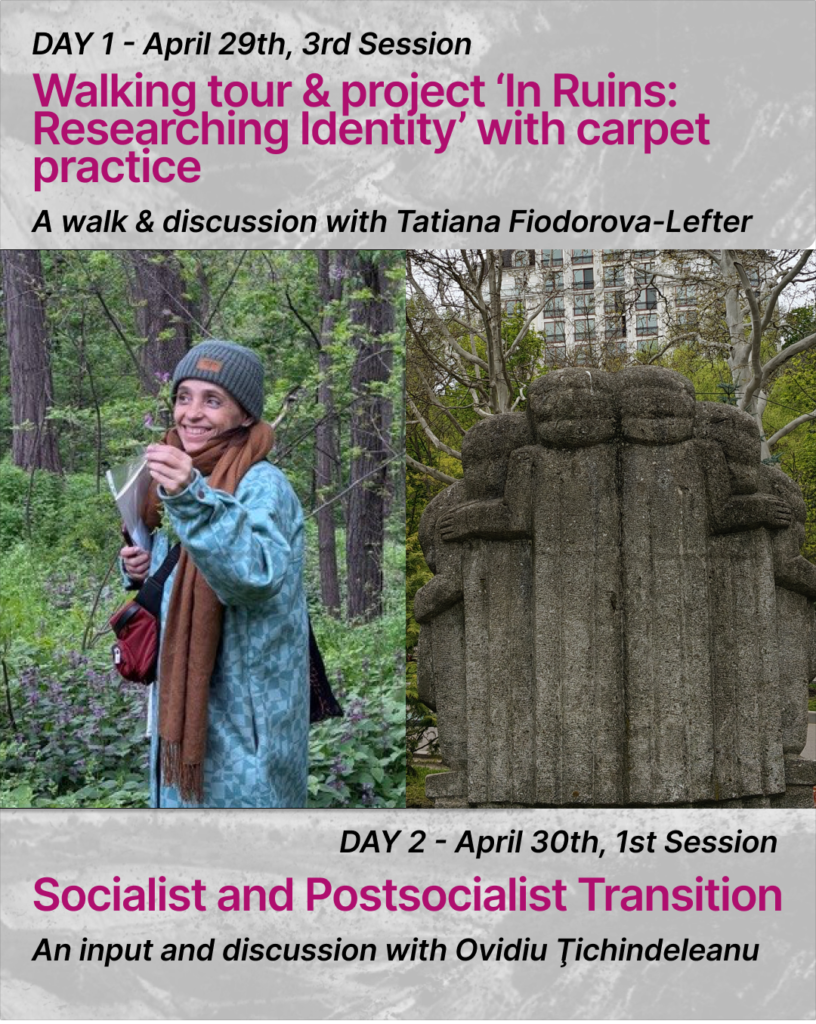
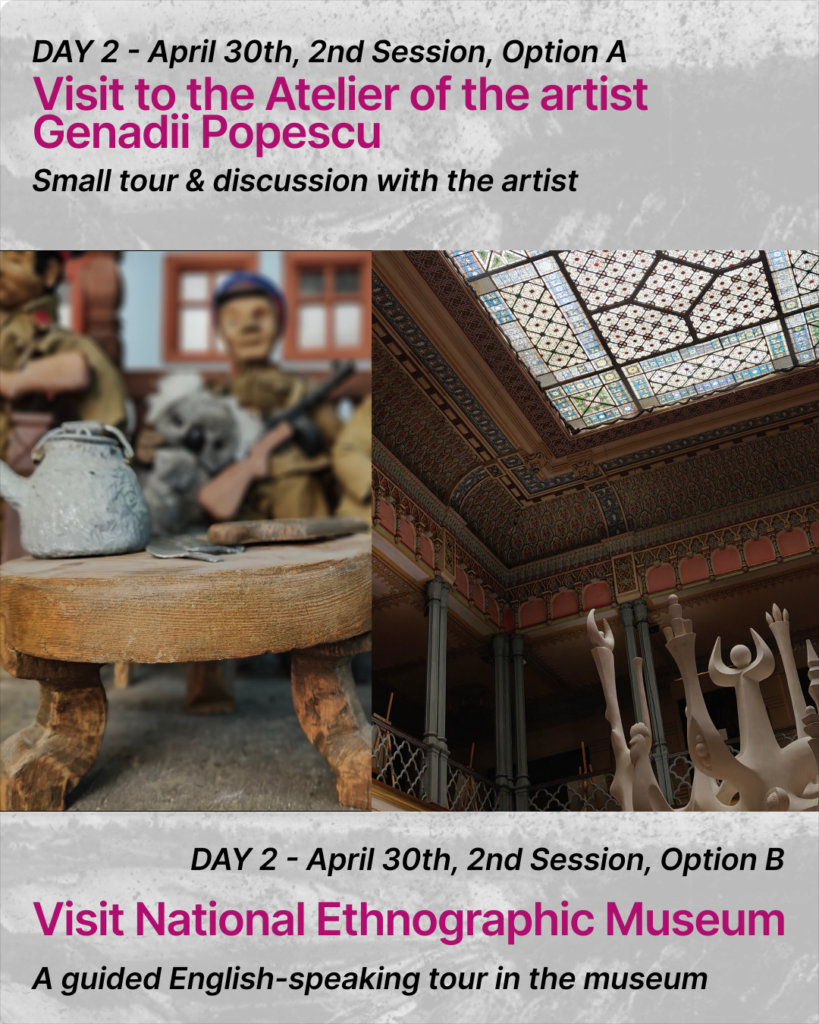
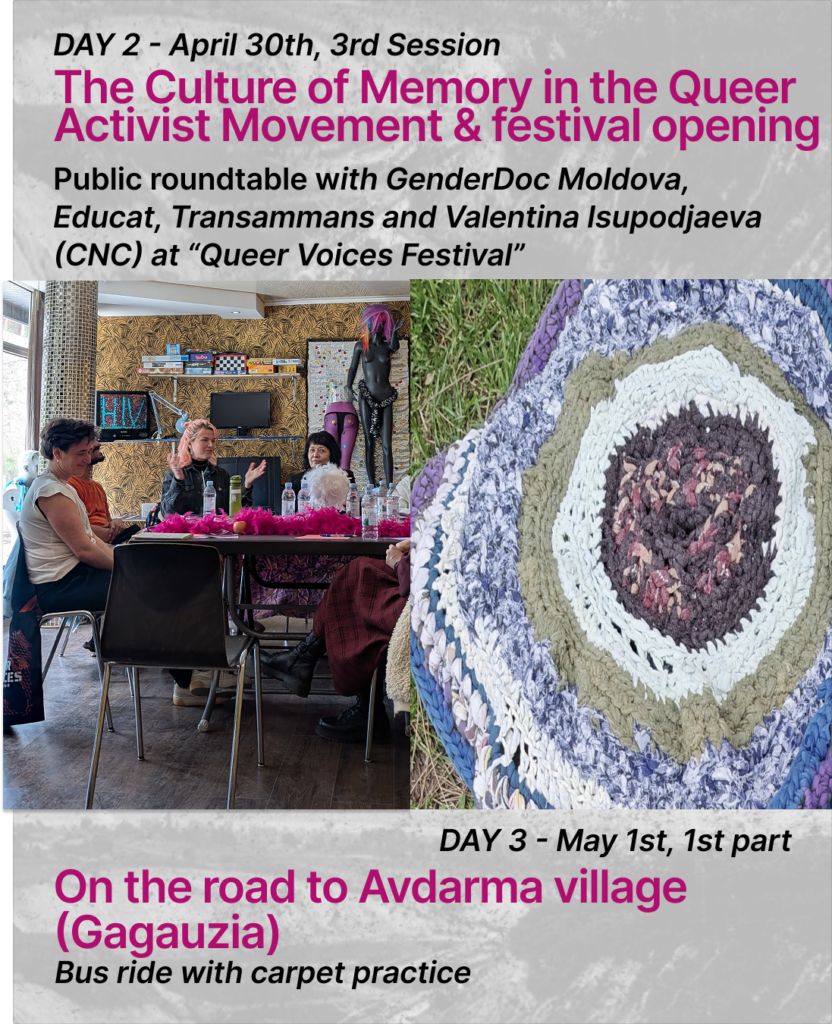
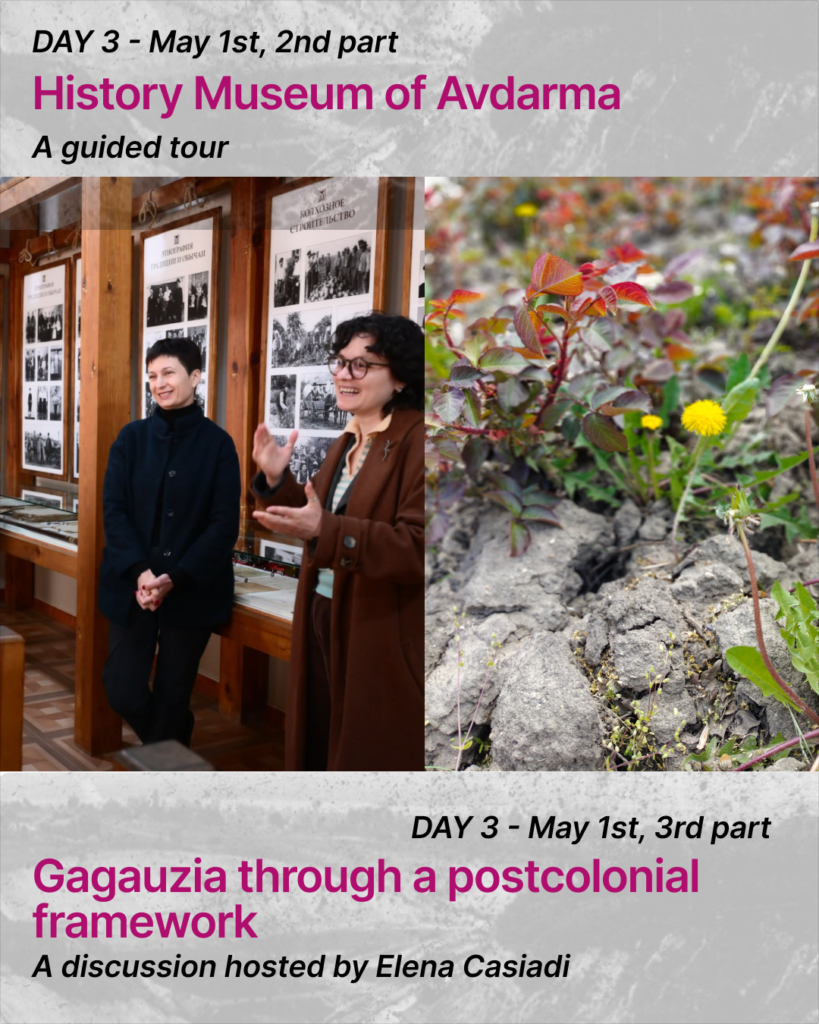
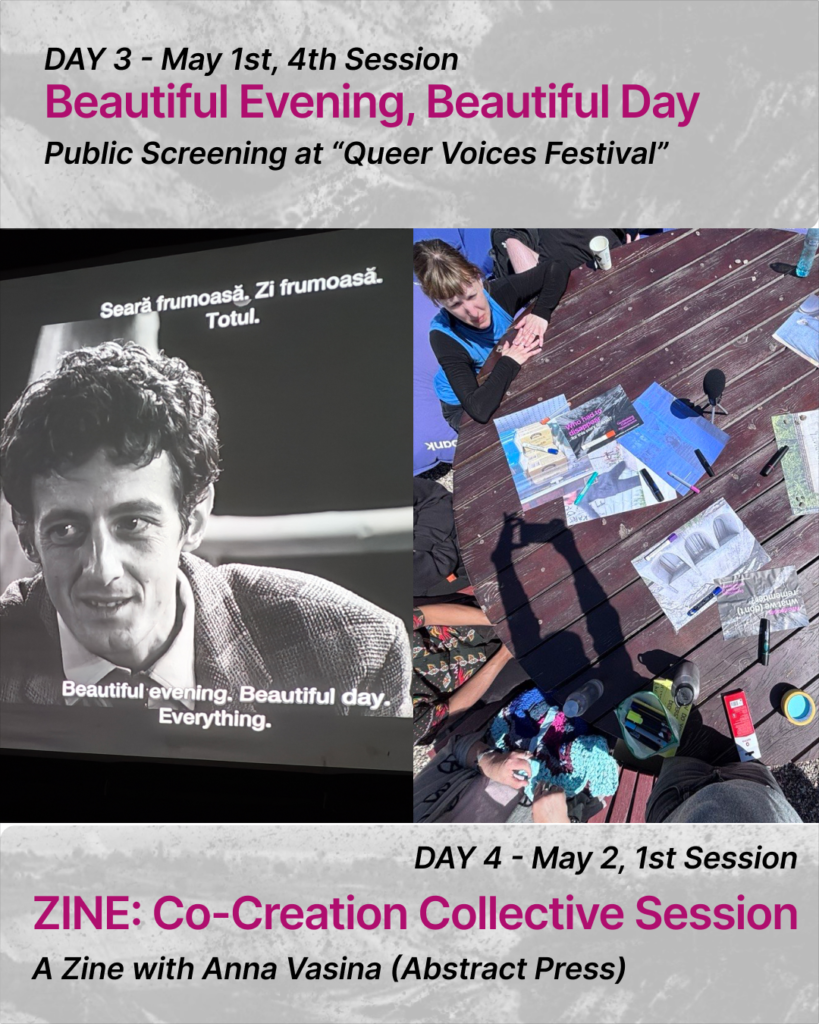
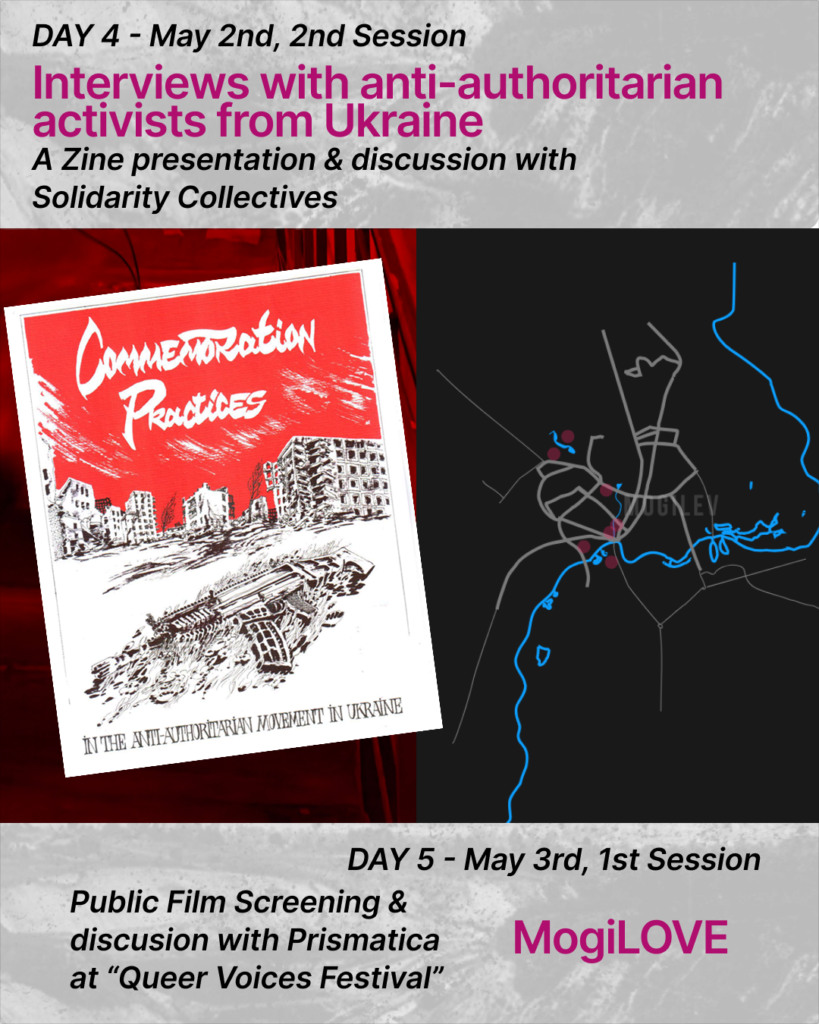
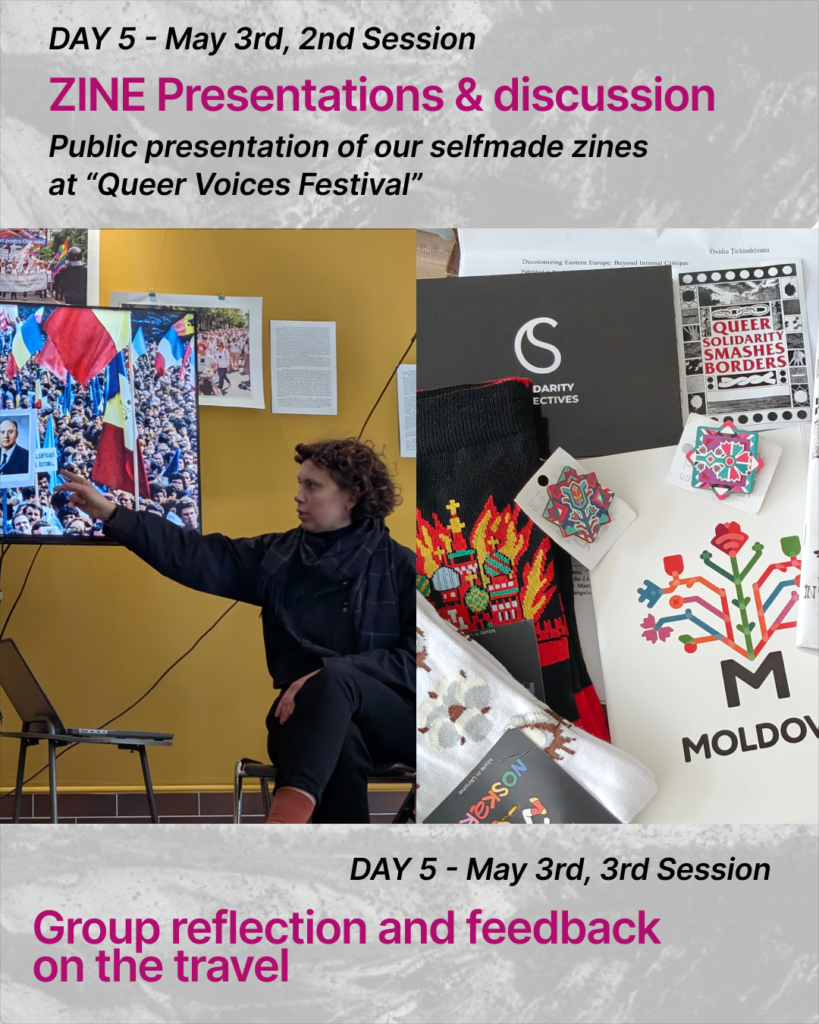
Pictures taken by Masha, Lilu and Fine from Educat Collective.
All in all we had a week in Moldova together with 25 participants. The time was shaped by layers of history, political complexity, and conversations about transformation — both personal and collective. Through exchanges with historians, artists, activists, and local initiatives, we explored how empires, Soviet legacies, nationalism, and postsocialist transition continue to shape everyday life and political realities in Moldova and beyond. One recurring question throughout the week was how dominant narratives and societal goals shift whenever political systems and structures of power change — from Ottoman to Tsarist rule, from the Soviet Union to post-Soviet neoliberal realities.
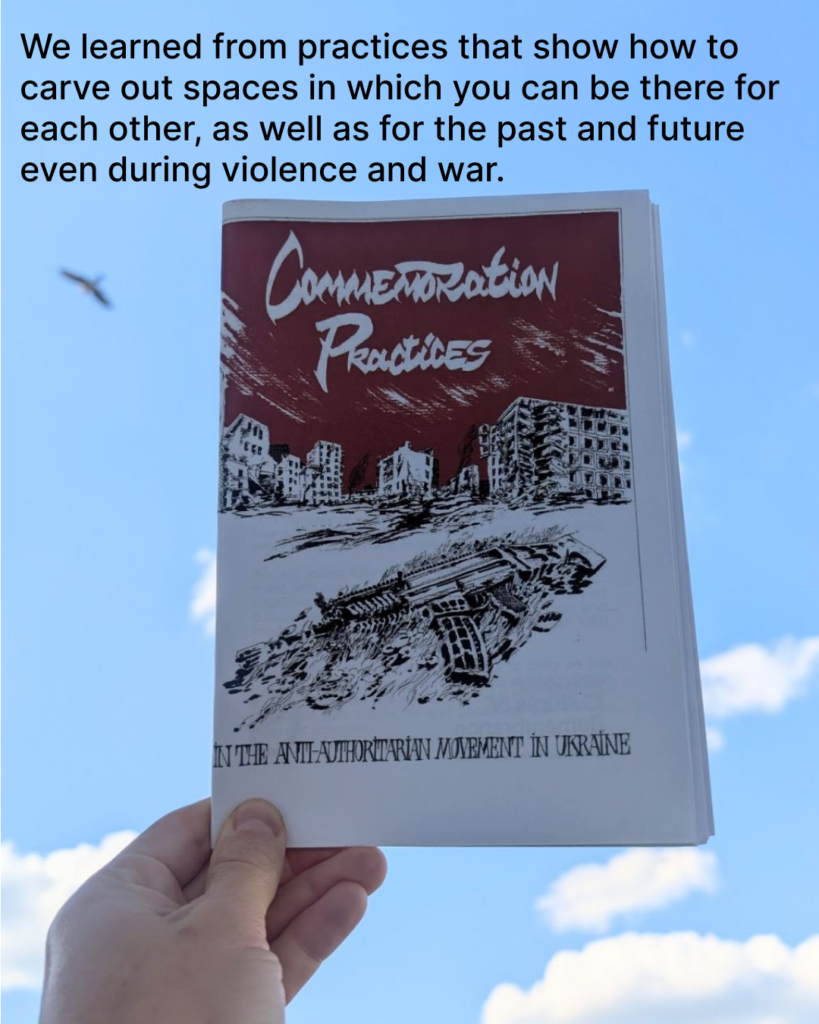
Discussions around imperialism, queer remembrance culture, anti-authoritarian organizing, and regional geopolitical tensions revealed how deeply the past is interwoven with the present. Questions of language also became political in very immediate ways: Russian, still widely spoken in the region, carried very different meanings depending on personal histories and experiences of war, displacement, or resistance.
What stayed throughout the week was a strong awareness of plurality — plurality of voices, identities, memories, and experiences that resist simplified narratives about Eastern Europe – and yet, so many stories remained untold and forgotten, for example the enslavement of Roma people. Between brutalist architecture, artist studios, collective workshops, film screenings, and conversations over shared meals, the program gave a variety of impressions and impulses on solidarity, memory, power, and communities under pressure.
A-ha moments
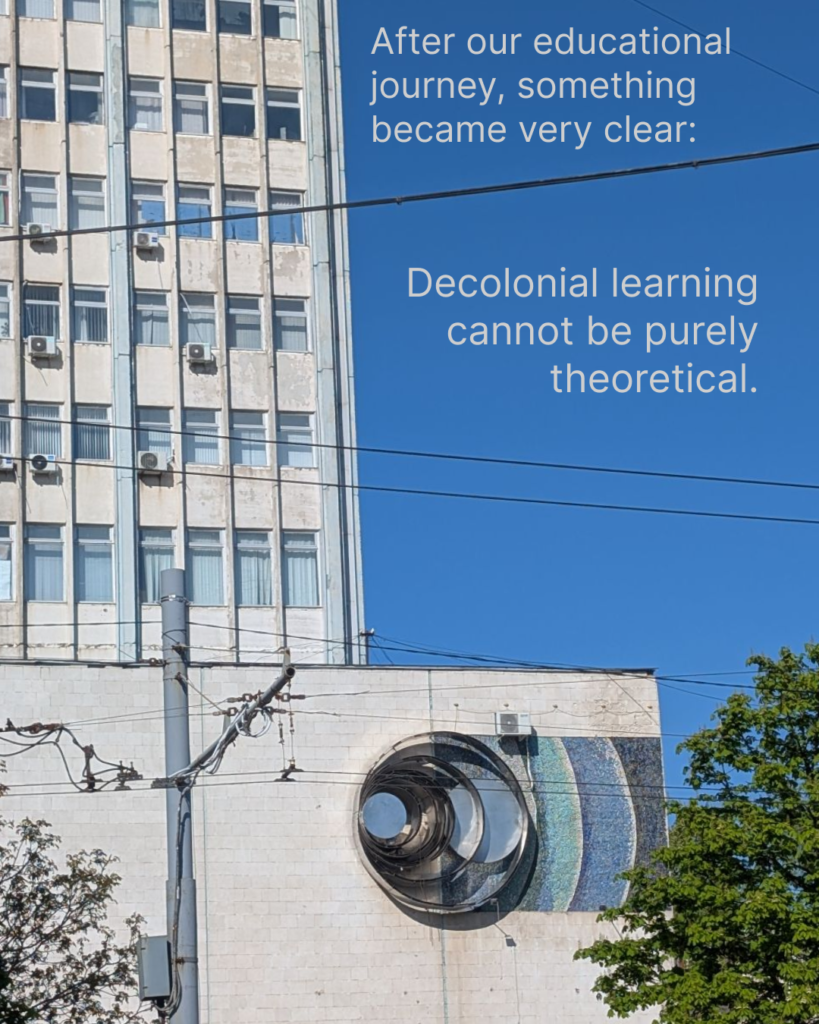
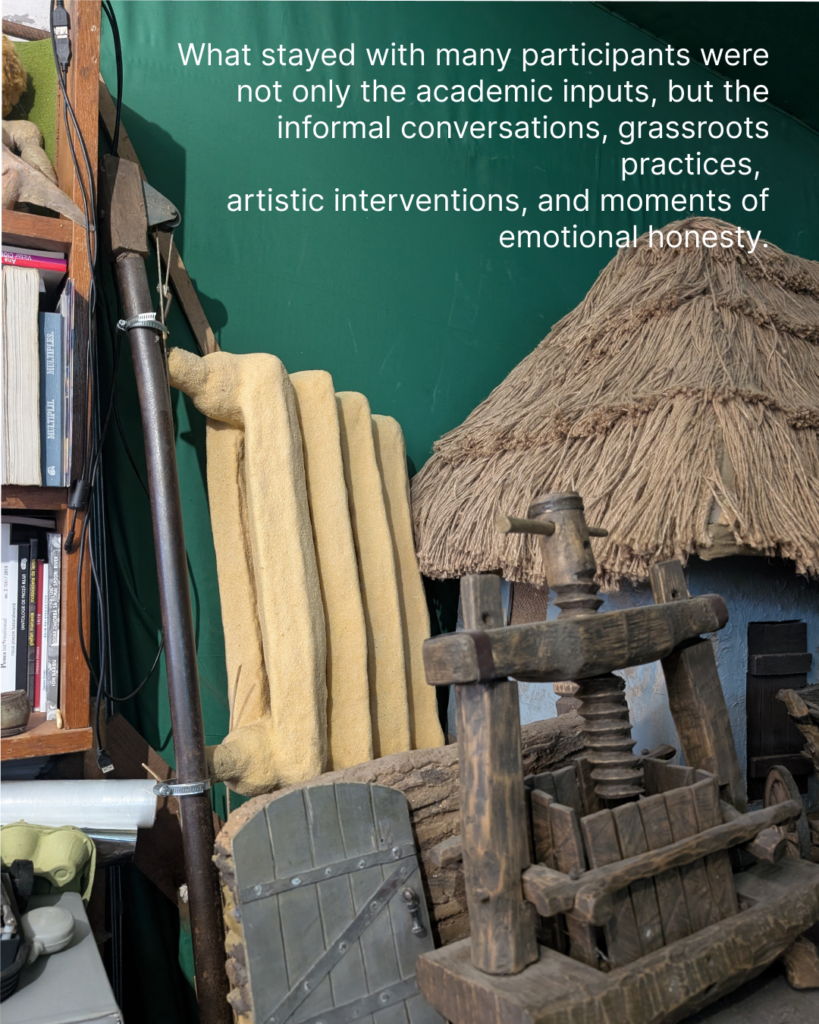
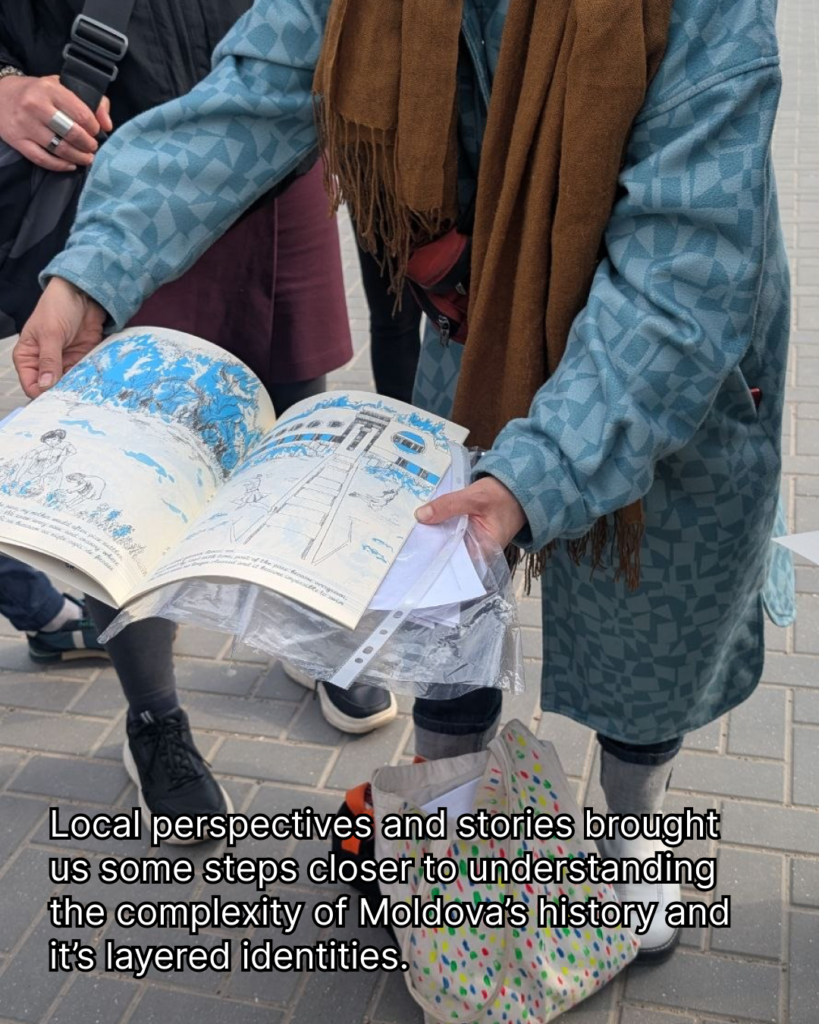
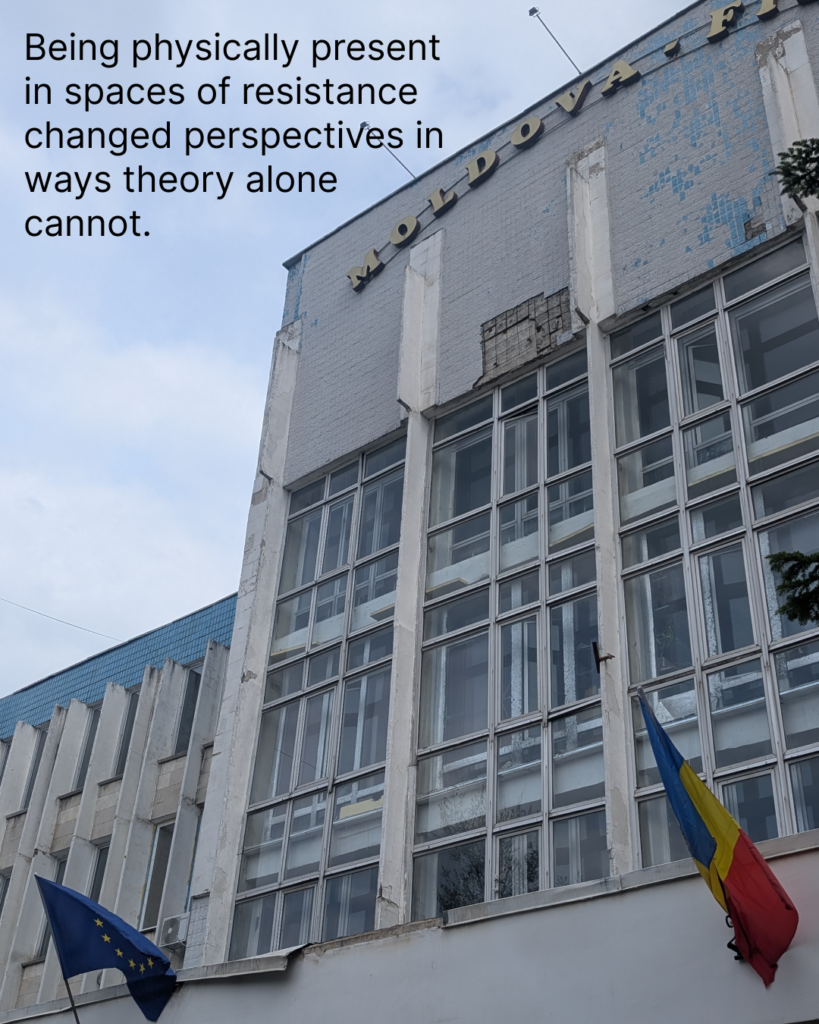
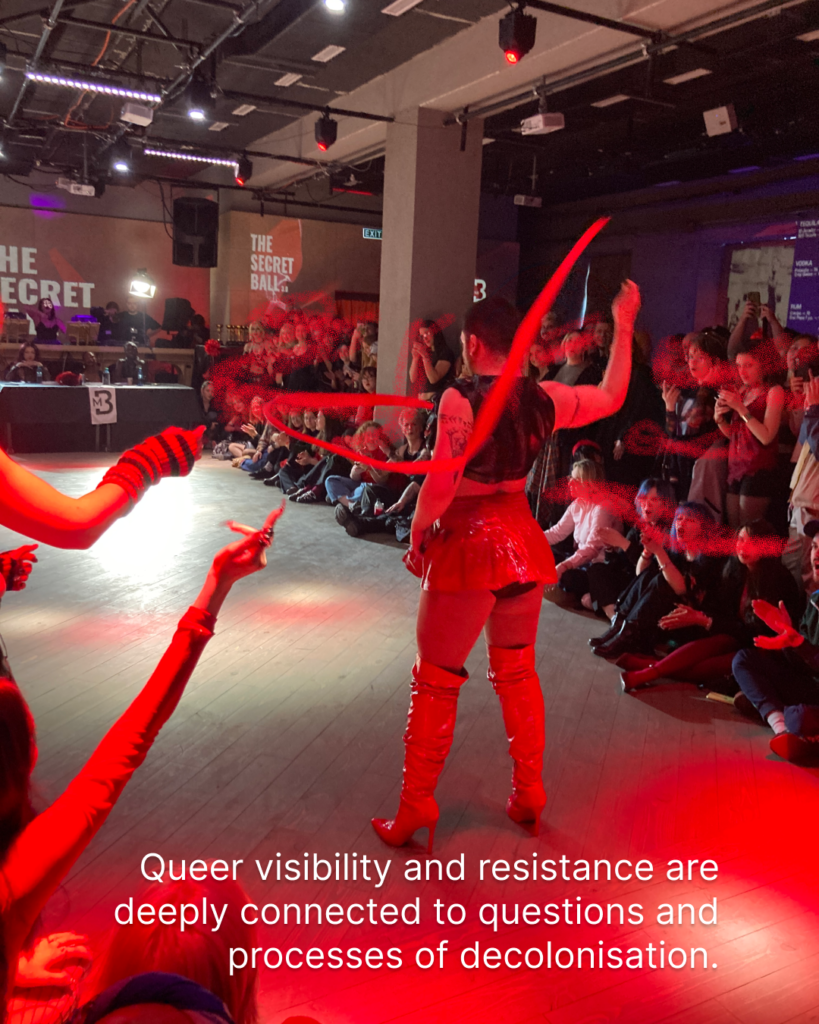
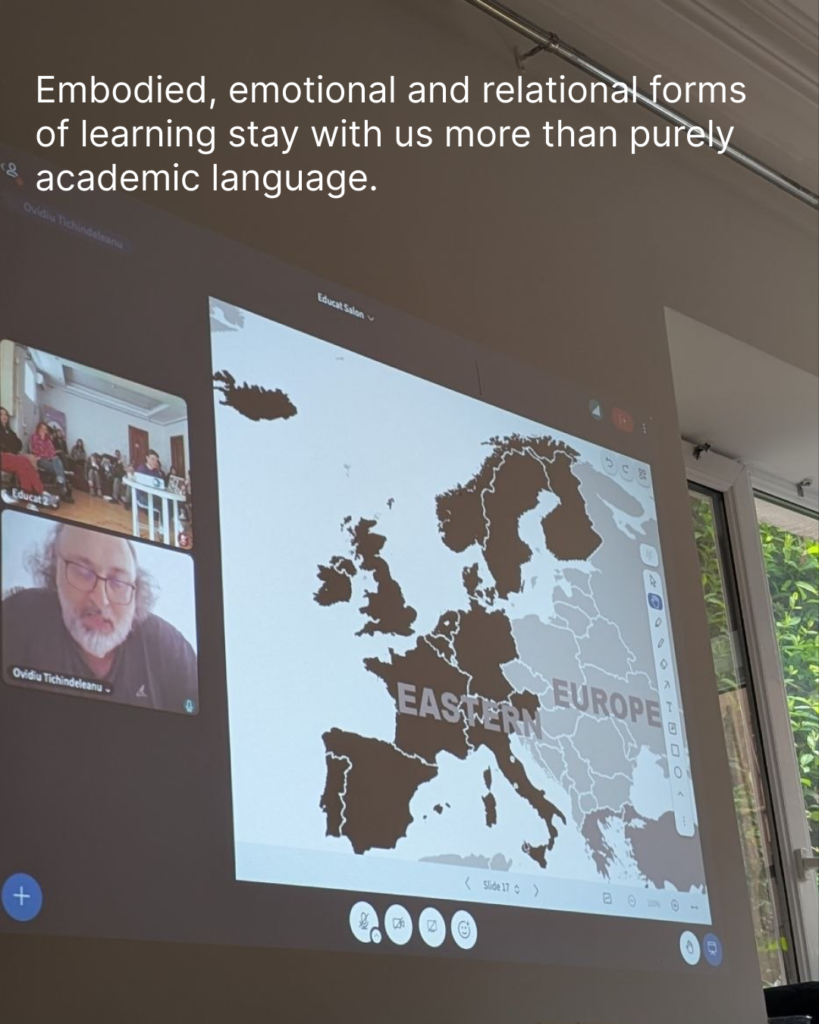
Pictures taken by Lilu from Educat Collective.
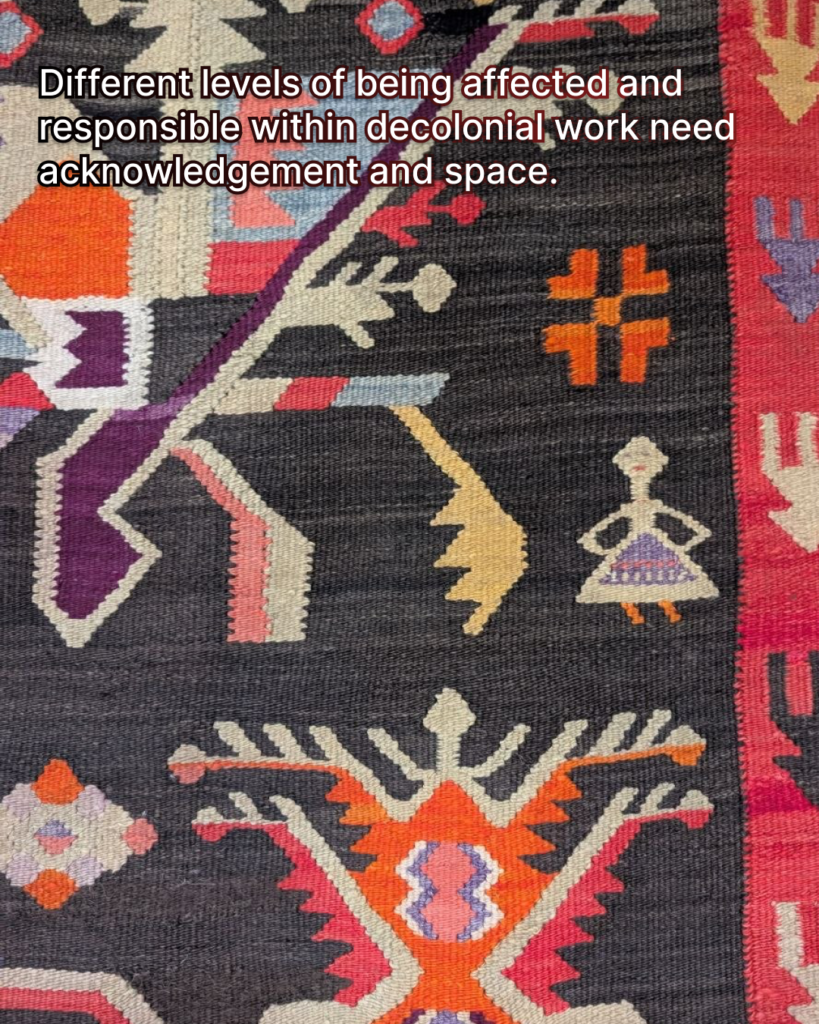
Some of the most meaningful moments happened outside formal sessions: on bus rides, while knitting a carpet together, in artistic and activist spaces during shared reflective moments and encounters between people with very different backgrounds. These were the moments, in which we learned the most and got inspired the most.
Our participants reflected on the importance of practical interaction, emotional learning, grassroots organising, and being present in spaces of queer visibility and resistance. At the same time, the reflection process also made clear where more space, care, and discussion were needed – around different levels of affection and responsibility, accessibility, safety, rest, and underrepresented perspectives.
Project partners
The project has been carried and inspired by a huge network of comrades, activists, artists and educators. For the recent episode of “Cultures of Remembrance” together with Educat Collective, there is Art Platforma, Human Constanta, Prismatica, Solidarity Collectives and Moldox involved as main partners.